






What's Happening?
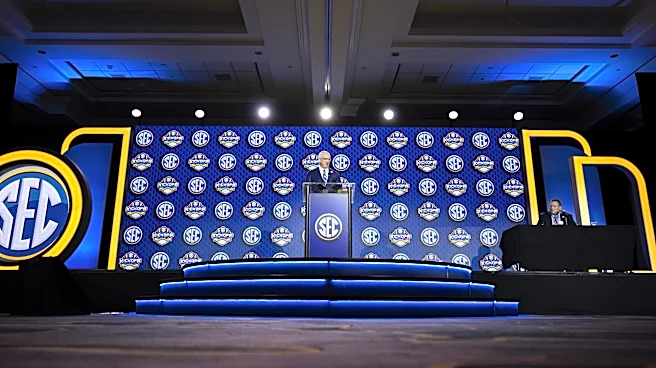
The Southeastern Conference (SEC) Championship Game will cease to be played after its 2026 edition, scheduled for December 5 at Mercedes-Benz Stadium in Atlanta. This decision was announced by SEC Commissioner Greg Sankey, who discussed the historic changes
during a visit to Savannah. The conclusion of the championship game coincides with the expansion of the College Football Playoff (CFP) from 12 to 24 teams, set to begin in 2027. The SEC Championship Game has been a significant event in college football since its inception in 1992, with the upcoming December game marking its 35th and final edition. Commissioner Sankey addressed these developments, including the impact on the SEC, during his exclusive interview with WJCL 22 Sports Director Amy Zimmer.
Why It's Important?
The discontinuation of the SEC Championship Game marks a significant shift in the landscape of college football, particularly for the SEC, which has long been a dominant force in the sport. The game has served as a crucial determinant for national championship contenders and a major revenue generator for the conference. Its elimination reflects a broader realignment of priorities within college football, emphasizing the expanded College Football Playoff as the primary mechanism for crowning a national champion. This change could alter how regular-season performance is valued and how teams strategize their schedules, potentially reducing the perceived importance of conference championship games in favor of securing a spot in the larger playoff field. For fans, it signifies the end of a cherished tradition that has produced numerous memorable moments and rivalries.
What's Next?
The final SEC Championship Game will take place in December 2026, concluding a 35-year tradition. Following this, the focus for SEC teams will entirely shift towards qualifying for the expanded 24-team College Football Playoff, which begins in 2027. The SEC will need to adapt its scheduling and competitive structure to align with the new playoff format, potentially leading to changes in regular-season matchups and conference standings. The conference is expected to celebrate the game's rich history during its final edition. The expanded playoff is anticipated to offer more opportunities for teams to compete for a national title, but it also means the unique drama and high stakes of the conference championship game will no longer be a part of the SEC calendar.
Beyond the Headlines
The decision to end the SEC Championship Game, driven by the expansion of the College Football Playoff, highlights a broader trend in collegiate sports towards national-level competition over traditional conference rivalries. While the expanded playoff aims to create a more inclusive and exciting postseason, it risks diminishing the historical and cultural significance of conference championships. The SEC Championship Game, in particular, has been a cornerstone of college football's identity, often serving as a de facto national quarterfinal. Its removal could lead to a re-evaluation of conference identity and the role of regular-season games, potentially shifting fan engagement and media attention more heavily towards the national playoff picture rather than regional conference battles. This move also underscores the increasing commercialization and nationalization of college sports, where broader market appeal often takes precedence over long-standing traditions.