







What's Happening?
The average price for a new car in the US remains close to $50,000, reflecting ongoing economic challenges. Factors such as inflation, triggered by geopolitical tensions, and high fuel prices have influenced the automotive market. Despite a slight decrease
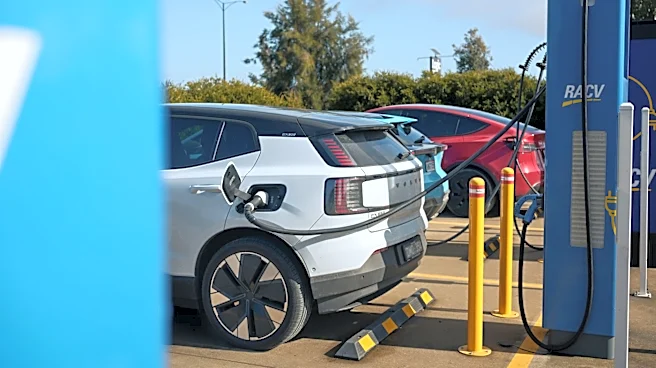
in total auto sales compared to last year, the electric vehicle market has seen growth due to rising fuel costs. The market dynamics show a 'K-shaped economy', where wealthier consumers are more likely to afford new vehicles, while middle and working-class buyers face financial strain.
Why It's Important?
The high average car price highlights economic disparities and the impact of global events on consumer markets. Rising vehicle costs could limit access to new cars for many Americans, affecting overall consumer spending and economic growth. The shift towards electric vehicles, driven by high fuel prices, indicates a potential long-term change in consumer preferences and industry focus. This trend could accelerate the transition to sustainable transportation, influencing policy decisions and investment in green technologies.
What's Next?
As the automotive market adapts to these economic conditions, manufacturers may focus on producing more affordable models to capture a broader consumer base. Policymakers might consider incentives to support electric vehicle adoption and address economic disparities. The industry could see increased competition as companies innovate to meet changing consumer demands. Monitoring fuel prices and geopolitical developments will be crucial in predicting future market trends and consumer behavior.