






What's Happening?
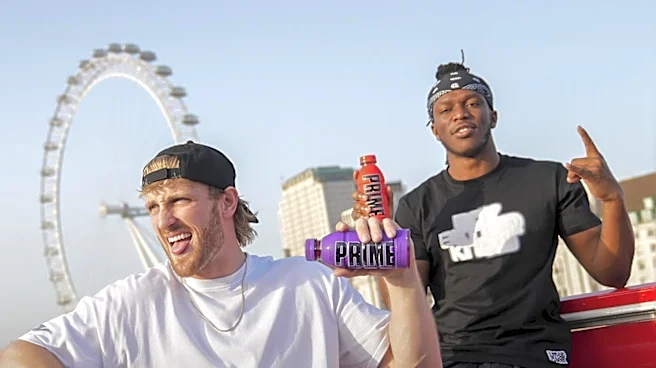
Logan Paul, co-founder of the beverage brand Prime, has publicly stated that he made a 'massive mistake' by not selling a portion of the company or bringing in acquisition partners when it was at its peak. This decision, he estimates, cost him at least
$100 million in missed opportunity. Paul made this admission on the PBD Podcast on September 15, as Prime attempts to recover from a significant decline in its fortunes. Prime, co-founded with fellow YouTuber KSI, achieved over $1 billion in global retail sales within two years of its launch, with annual sales projected to reach $1.2 billion by 2023. However, the brand's popularity and sales subsequently declined. Paul indicated that the company is now focused on stabilizing the business and rebuilding consumer trust. The initial success of Prime was driven by momentum, viral demand, and major sports partnerships, but this momentum has since dissipated.
Why It's Important?
This admission highlights the volatile nature of influencer-backed businesses and the critical importance of strategic financial decisions, particularly regarding exits or partial sales, at the height of a brand's success. For entrepreneurs and investors in the U.S. market, Paul's experience serves as a cautionary tale about the potential for rapid growth to be followed by equally rapid decline if opportunities to 'take chips off the table' are missed. The initial success of Prime demonstrated the power of leveraging social media followings to create a major consumer brand, but its subsequent struggles underscore the challenges of sustaining such momentum and navigating market scrutiny. The brand's expansion into energy drinks, particularly its high caffeine content, also attracted significant criticism from parents, politicians, and health advocates, leading to calls for investigation by the U.S. Food and Drug Administration and a proposed class-action lawsuit. This illustrates the regulatory and public relations risks associated with products marketed to a young demographic.
What's Next?
Prime is currently focused on stabilizing its business and rebuilding consumer trust, according to Logan Paul. This will likely involve strategic marketing efforts to regain consumer confidence and potentially a re-evaluation of its product offerings or target demographics. The ongoing legal scrutiny, including a federal court order for Paul and KSI to designate themselves as custodians for electronic discovery in a class-action lawsuit, suggests that the brand will continue to face legal challenges. While these court proceedings do not establish wrongdoing, they indicate continued legal pressure. The company may need to address concerns regarding its product formulations, particularly the caffeine content in Prime Energy, to mitigate future regulatory and public relations issues. The long-term success of Prime will depend on its ability to adapt to market changes, address consumer and regulatory concerns, and effectively manage its brand image in a highly competitive beverage industry.
Beyond the Headlines
The trajectory of Prime, from a billion-dollar valuation to a significant decline and Paul's admission of a $100 million missed opportunity, offers a deeper insight into the evolving landscape of influencer economics and brand building. It underscores the distinction between viral popularity and sustainable business models. The initial success of Prime was heavily reliant on the personal brands of Paul and KSI, demonstrating how creator audiences can be converted into consumer businesses. However, the subsequent 'cool to hate on Prime' sentiment, as described by Paul, reveals the double-edged sword of influencer marketing, where public perception can shift rapidly and negatively impact a brand. This case also highlights the ethical considerations in marketing products, especially those with high caffeine content, to younger audiences, and the potential for regulatory bodies and public opinion to influence business outcomes. The story serves as a case study for the challenges of maintaining authenticity and trust in a market increasingly driven by social media trends.