





What's Happening?
Chinese energy giant Sinopec has awarded an engineering, procurement, and construction (EPC) contract for the expansion of its Weizhou oilfield in the Beibu Gulf. The contract was granted to a consortium consisting of Sinopec Petroleum Engineering Design
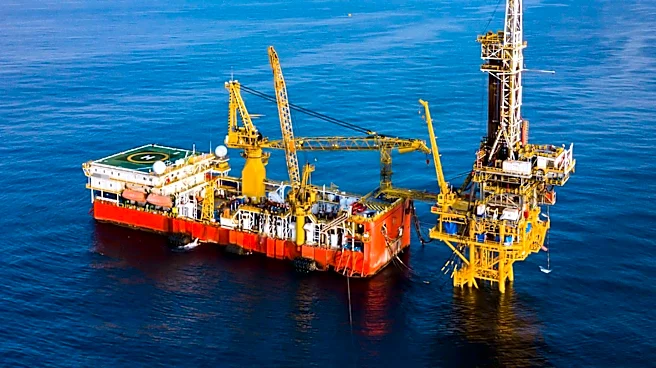
and Sinopec Shengli Oil Construction. This project involves the development of a new offshore processing platform, subsea pipelines, and fiber-optic cables. The scope of work includes detailed engineering, procurement, and fabrication of an eight-legged jacket platform with topsides, accommodation facilities, and a well-workover module. Additionally, the contractors will install approximately 26 km of subsea pipeline and a parallel fiber-optic cable, along with riser connections and expansion bends. Modifications to the existing WZ11-4 platform are also planned to integrate the new infrastructure. The new platform is designed to accommodate 28 wells, with 16 wells in the initial drilling program, comprising production, water-injection, and gas-injection wells. The EPC package has a planned execution period of 615 days, with completion targeted for the project's readiness for first oil. The original tender estimated the package at RMB1.04 billion ($146 million), though the final contract value remains undisclosed.
Why It's Important?
This contract signifies a substantial investment by Sinopec in enhancing China's domestic oil and gas production capabilities. The expansion of the Weizhou oilfield is crucial for meeting China's energy demands and reducing its reliance on imported energy sources. By developing new offshore infrastructure, Sinopec aims to increase output from a key domestic asset, contributing to national energy security. The project also highlights the capabilities of Chinese engineering and construction firms, as the contract was awarded to a domestic consortium. This could bolster the expertise and competitiveness of these companies in the global offshore energy sector. Furthermore, the integration of fiber-optic cables alongside pipelines indicates a move towards more advanced and digitally integrated offshore operations, which can improve monitoring, control, and efficiency. The scale of the project, involving significant subsea infrastructure, underscores the technical complexity and strategic importance of such developments for China's energy future.
What's Next?
The project is now entering its execution phase, with a planned period of 615 days for engineering, procurement, and construction. The consortium of Sinopec Petroleum Engineering Design and Sinopec Shengli Oil Construction will proceed with the fabrication of the new offshore platform and the installation of subsea pipelines and fiber-optic cables. Key milestones will include the completion of fabrication, offshore installation, and the eventual hook-up and commissioning of the new WZ-CEP central processing platform. Modifications to the existing WZ11-4 platform will also be carried out in parallel. The ultimate goal is to achieve 'first oil' from the expanded Weizhou field, which will mark the successful completion of this phase of development. The project's progress will be closely watched as it contributes to Sinopec's broader strategy of increasing domestic energy production and leveraging advanced offshore technologies.