





What's Happening?
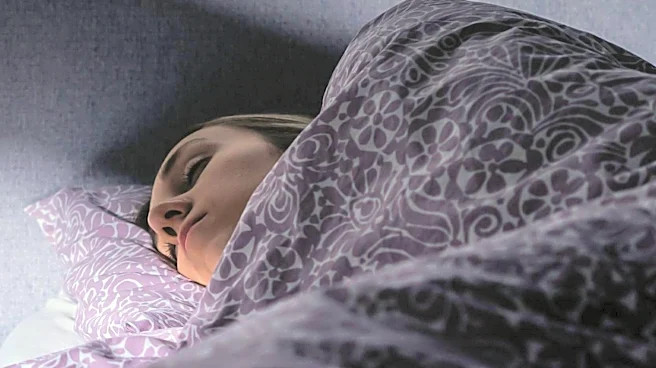
The 'sleepmaxxing' trend, popular on social media, involves stacking numerous sleep habits, gadgets, and supplements to optimize rest. While some components, such as consistent sleep and wake times, a dark cool bedroom, and avoiding late caffeine and alcohol,
are supported by strong scientific evidence, many others lack robust backing. Practices like mouth taping, tart cherry mocktails, and elaborate sleep tracking are often based on weak or no evidence. Clinicians express concern that the all-or-nothing mindset of sleepmaxxing can disrupt sleep, leading to anxiety and an over-reliance on unproven methods. The trend has gained momentum due to increased public awareness of sleep's importance, partly driven by the American Heart Association's inclusion of sleep duration as a core health measure in 2022, and the widespread use of consumer wearables that provide sleep scores.
Why It's Important?
The rise of sleepmaxxing highlights a growing public interest in health optimization but also exposes a vulnerability to unverified health trends. For individuals, adopting unproven hacks can lead to wasted money on ineffective products and, more critically, can induce 'orthosomnia'—a preoccupation with perfecting sleep data that paradoxically worsens sleep quality. This trend can divert individuals from seeking evidence-based treatments for genuine sleep disorders, such as cognitive behavioral therapy for insomnia (CBT-I), which is a first-line treatment. The commercialization of sleep optimization, where free and effective habits are overshadowed by marketable gadgets and supplements, creates a market for products with questionable efficacy, potentially misleading consumers and impacting public health by promoting anxiety around a natural biological process.
What's Next?
As the sleepmaxxing trend continues, clinicians anticipate an ongoing need to educate the public on distinguishing between evidence-based sleep hygiene and unproven fads. Health organizations may increase their efforts to provide clear, accessible information on effective sleep practices and the potential risks of certain hacks, such as mouth taping for individuals with undiagnosed breathing problems. There may also be a continued push for more rigorous scientific studies on popular sleep supplements and devices to provide clearer guidance. Individuals experiencing persistent poor sleep are advised to consult with a clinician for a proper assessment and to consider established treatments like CBT-I, rather than relying solely on social media trends.
Beyond the Headlines
The sleepmaxxing phenomenon reflects a broader societal shift towards self-optimization and the influence of social media on health behaviors. It underscores the challenge of discerning credible health information in an era of abundant, often unverified, online content. The trend also touches upon the psychological aspect of control; in a world where many feel a lack of agency, the structured rituals and measurable metrics of sleepmaxxing offer a sense of control over one's health, even if that control is illusory. This pursuit of 'perfect' sleep can inadvertently transform a natural process into a performance, fostering anxiety and potentially exacerbating sleep issues for those who become overly focused on achieving ideal 'sleep scores' rather than simply listening to their body's needs.