







What's Happening?
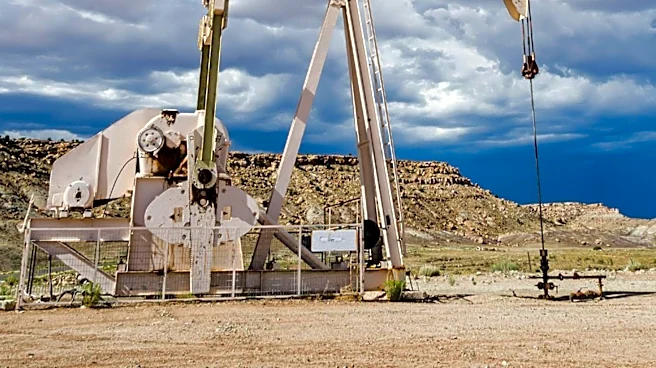
The government of President Claudia Sheinbaum is preparing to initiate pilot tests for hydraulic fracturing, or 'fracking,' in Mexico's northern non-conventional gas fields. These tests, expected to begin in the coming weeks, aim to assess the economic
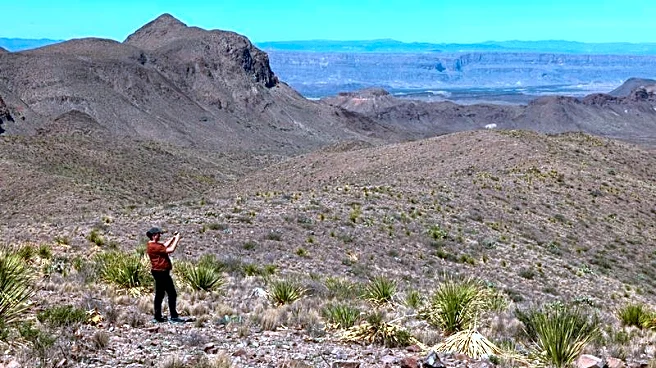
viability and potential of these reserves. The decision follows a partial endorsement from a scientific committee convened by Sheinbaum, which recommended against fracking in the Tampico-Misantla basin due to environmental and social concerns, but approved exploration in the Burgos and Sabinas-Burro-Picachos basins. These northern basins, located near the U.S. border, hold the highest potential for non-conventional gas. The primary goal of these pilot tests is to gather data that can attract private, national, and international investment, as the financial scale of such projects exceeds the capacity of the state-owned oil company, Pemex. The government is also considering the creation of a specialized trust to channel private capital into these non-conventional hydrocarbon fields.
Why It's Important?
This move represents a significant shift in Mexico's energy policy and has substantial implications for the U.S. and the global energy market. Mexico's reliance on natural gas imports from the U.S. is high, and successful domestic fracking could reduce this dependency, impacting U.S. natural gas exporters. The decision to pursue fracking, despite previous ideological opposition, underscores a pragmatic approach to energy security and economic development. For U.S. energy companies, this could open new avenues for investment and collaboration with Pemex, particularly given their extensive experience in fracking technologies. However, the environmental concerns associated with fracking, which led to the rejection of the Tampico-Misantla basin, remain a point of contention and could attract scrutiny from environmental groups and international bodies. The success of these pilot tests will be crucial in determining whether Mexico can unlock its vast non-conventional gas reserves and reshape its energy landscape, potentially altering trade dynamics with the U.S.
What's Next?
The pilot tests are expected to commence in the coming weeks, focusing on drilling a small number of wells in specific areas of the Burgos and Sabinas-Burro-Picachos basins. The results of these tests, particularly regarding the quantity of extractable natural gas and its commercial viability, will be critical. If the tests yield positive economic indicators, the Sheinbaum administration will use this data to actively court private investors, both domestic and international, to finance large-scale fracking projects. Concurrently, the government will likely work on establishing the specialized trust fund to facilitate private capital flow. Regulatory frameworks will also be evaluated to ensure legal certainty for potential investors. The U.S. energy sector will be closely watching these developments for potential partnership opportunities and shifts in the North American energy market. The environmental implications and the government's mitigation strategies will also be under continuous review by various stakeholders.
Beyond the Headlines
The re-evaluation of fracking in Mexico under President Sheinbaum highlights a broader global tension between energy independence, economic growth, and environmental sustainability. Mexico's decision to explore fracking, a method that has been controversial due to its environmental impact, reflects a strategic pivot to reduce reliance on foreign energy sources, particularly from the U.S. This move could lead to a more diversified energy portfolio for Mexico but also poses significant challenges in terms of water management, potential seismic activity, and greenhouse gas emissions. The creation of a specialized trust for private investment signals a pragmatic approach to financing large-scale energy projects, acknowledging the limitations of state-owned enterprises. This development could also influence regional energy policies and investment trends, as other nations weigh similar trade-offs. The long-term success of Mexico's fracking initiative will depend not only on economic returns but also on its ability to address environmental concerns and ensure sustainable practices, setting a precedent for future energy development in the region.