




What's Happening?
Modern finance is experiencing a divergence between traditional credit networks and the emerging digital asset economy. Investors are faced with the decision of whether to invest in companies representing established payment systems or those at the forefront
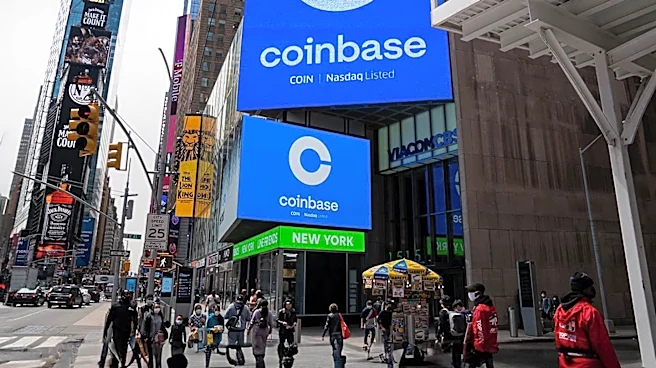
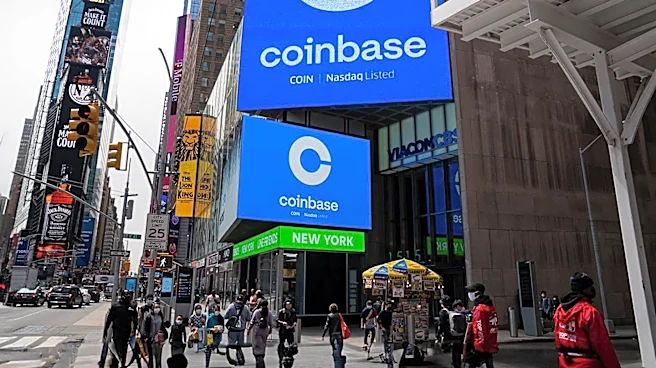
of digital assets. Coinbase Global, a key player in the digital asset world, offers services from trading to custody and is central to the USDC stablecoin ecosystem. In the 12 months ending September 30, 2026, Coinbase reported nearly $5.6 billion in revenue, a 26.6% decline from the previous year, and a net loss of approximately $701.6 million. Mastercard, a global leader in traditional payments, operates a vast network facilitating billions of transactions across over 210 countries. For the same period, Mastercard's revenue reached close to $36.3 billion, marking a 15.3% growth rate, with a net income of nearly $17.0 billion and a net margin of about 46.7%. The choice between these two financial stocks involves weighing the high-growth potential and volatility of crypto against the proven reliability and steady returns of global payment rails.
Why It's Important?
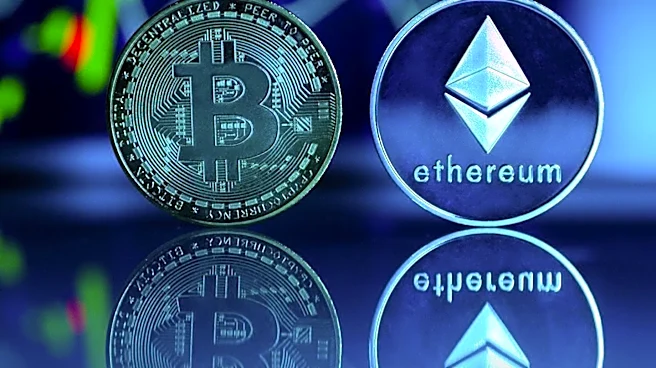
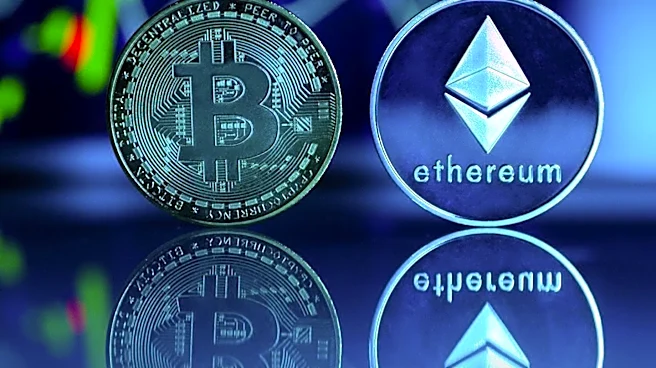
The comparison between Coinbase Global and Mastercard highlights a critical juncture in the financial industry, reflecting the ongoing shift and competition between traditional finance and fintech. For investors, this decision impacts portfolio strategy, as it involves betting on which infrastructure will dominate the future of money. Coinbase's performance is heavily tied to crypto trading volumes, particularly Bitcoin and Ethereum, making its revenue susceptible to market sentiment and regulatory changes. Mastercard, conversely, generates steady revenue from transaction fees, offering more predictable results regardless of market fluctuations. The differing risk profiles—Coinbase's exposure to cybersecurity threats and regulatory scrutiny versus Mastercard's competition and litigation risks—are crucial considerations. The valuation metrics also present a contrast: Coinbase has a higher forward P/E but a lower P/S ratio, while Mastercard appears more reasonably priced based on its forward P/E, offering more stable earnings.
What's Next?
Looking ahead to 2027, the performance of Coinbase Global will largely depend on the sustained high volume of crypto trading and the regulatory environment surrounding digital assets. Any significant shifts in Bitcoin and Ethereum sentiment or increased regulatory scrutiny could directly impact its revenue and profitability. For Mastercard, continued expansion through strategic collaborations and its ability to navigate global competition and regulatory pressures on pricing rates will be key. Mastercard's recent acquisition of stablecoin infrastructure firm BVNK indicates its strategic move to gain a foothold in digital-asset payments while maintaining its core business. Investors will be closely watching how both companies adapt to the evolving financial landscape, with Coinbase aiming to capitalize on crypto rallies and Mastercard focusing on steady growth through its established payment network and cautious expansion into digital payments.
Beyond the Headlines
The divergent paths of Coinbase Global and Mastercard underscore a broader transformation in how value is exchanged and stored globally. Coinbase represents the disruptive force of decentralized finance, challenging traditional banking structures and offering new avenues for investment and transaction. Its success could signal a more widespread adoption of cryptocurrencies and blockchain technology, potentially reshaping global monetary systems. Mastercard, while a traditional giant, is not static; its foray into stablecoin infrastructure demonstrates a strategic adaptation to the digital asset trend, aiming to integrate new technologies within its existing robust framework. This dynamic interplay between innovation and established systems raises questions about future financial regulation, consumer protection in digital asset markets, and the long-term viability of purely crypto-dependent business models versus hybrid approaches that blend traditional and digital finance. The outcome will influence not only investment portfolios but also the very architecture of global commerce.