







What's Happening?
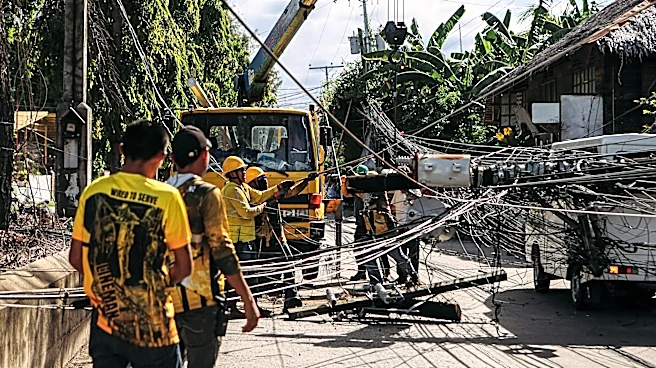
Businesses operating out of the Incubator Kitchen Collective in Newport, Kentucky, are working to recover after recent storms caused a 30-hour power outage. The 10,000-square-foot facility, which houses 48 companies, including Family Thyme Kitchen, experienced
significant disruptions. Emma Werle, co-owner of Family Thyme Kitchen, a meal delivery service, reported losing between $12,000 and $13,000 in revenue and nearly $3,000 in food products due to the outage. The power loss forced the business to delay or cancel an entire week's worth of orders, impacting the 100 to 125 families it typically serves weekly. The Incubator Kitchen Collective's founder and executive director, Rachel Desrochers, mobilized efforts to assist the affected businesses, including bringing in a 16-foot freezer trailer and generators to restore operations. The collective also provided guidance on insurance claims and urged community support for local food businesses.
Why It's Important?
This event highlights the vulnerability of small and home-based businesses, particularly those reliant on specialized infrastructure like commercial kitchens, to natural disasters and utility disruptions. The financial losses incurred by Family Thyme Kitchen underscore the significant economic impact that even a relatively short power outage can have on small enterprises, affecting their revenue, inventory, and ability to serve customers. The proactive response from the Incubator Kitchen Collective demonstrates the critical role that shared workspaces and community support networks play in the resilience and recovery of local economies. Such collectives provide not only physical resources but also crucial guidance and assistance during crises, helping small businesses navigate challenges like insurance claims and operational continuity. The reliance on local customer bases for recovery also emphasizes the importance of community engagement in sustaining small businesses.
What's Next?
Businesses at the Incubator Kitchen Collective will continue their recovery efforts, relying on community support and the resources provided by the collective. Family Thyme Kitchen, for instance, plans to focus on its local customer base to rebuild its operations and revenue. The Incubator Kitchen Collective has made a donation link available on its website to further assist the affected businesses. This situation may prompt other shared commercial spaces and small business incubators to review and enhance their disaster preparedness plans, including backup power solutions and emergency communication strategies. Local communities might also see increased calls to support small businesses, especially those impacted by unforeseen events, through direct patronage or donations.
Beyond the Headlines
The incident at the Incubator Kitchen Collective sheds light on the broader challenges faced by the growing sector of home-based and small-scale food businesses. These enterprises often operate with tighter margins and fewer resources than larger corporations, making them particularly susceptible to external shocks. The reliance on shared facilities, while cost-effective, also centralizes risk, as a single point of failure, like a power outage, can affect multiple businesses simultaneously. This situation underscores the need for robust local support systems, including government aid, community initiatives, and insurance options tailored to the unique needs of small businesses. It also highlights the evolving landscape of entrepreneurship, where flexibility and community integration are becoming increasingly vital for survival and growth in an unpredictable environment.