




What's Happening?
The U.S. Federal Energy Regulatory Commission (FERC) has approved five significant gas infrastructure projects, including a substantial expansion of Cheniere Energy's Sabine Pass LNG export plant in Louisiana. This expansion is projected to add nearly
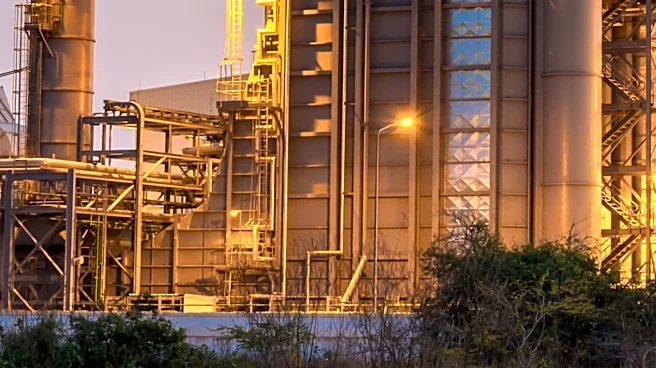
20 million tonnes per year (tpy) of LNG production capacity to the existing 30 million tpy facility. The approvals, granted on November 19, encompass approximately $3 billion in proposed pipeline and storage investments, excluding the $15 billion estimated construction costs for the Sabine Pass liquefaction expansion itself. Specifically, FERC authorized Cheniere Energy subsidiaries to construct and operate three additional liquefaction trains at the Sabine Pass plant. Phase 1 will include Train 7, with a peak production capacity of about 6 million tpy, and a boil-off gas reliquefaction unit. Phase 2 will add Trains 8 and 9, each with a peak capacity of 6 mtpa, along with supporting infrastructure. Additionally, FERC approved two pipeline projects to supply feedgas to the expanded terminal: the $1.63 billion Sabine Crossing Pipeline project in Texas and the estimated $390 million Creole Trail Pipeline expansion in Louisiana. Other approved projects include the Mountain Valley Pipeline (MVP) Boost Project in Virginia and West Virginia, the Southeast Virginia Energy Storage Project, the Forza Pipeline from New Mexico to West Texas, and the Texas Eastern Line 31 expansion in Mississippi.
Why It's Important?
These FERC approvals are crucial for bolstering the United States' role as a major global energy exporter and for enhancing domestic natural gas infrastructure. The Sabine Pass LNG expansion, in particular, signifies a substantial increase in the nation's LNG export capacity, which can influence international energy markets and geopolitical dynamics. The associated pipeline projects, such as the Sabine Crossing Pipeline and Creole Trail Pipeline expansion, are vital for ensuring a reliable supply of natural gas to the expanded export facility, thereby supporting the economic viability of the LNG plant. The approval of projects like the MVP Boost and the Forza Pipeline will improve natural gas transportation efficiency and connectivity across different regions, potentially leading to more stable energy prices and increased energy security for consumers and industries. Furthermore, the Southeast Virginia Energy Storage Project will enhance regional energy resilience by providing significant liquefaction and commercial gas storage capacity. These investments reflect a continued commitment to natural gas as a key component of the U.S. energy portfolio, supporting job creation in the energy sector and contributing to regional economic development in the states where these projects are located.
What's Next?
Cheniere Energy has not yet made a final investment decision (FID) for the Sabine Pass Stage V LNG expansion but anticipates greenlighting Phase 1 by early 2027, contingent on regulatory approvals and financing. Initial LNG exports from the expansion could commence in 2030, with commercial service potentially beginning in mid-2031. For the Sabine Crossing Pipeline, construction is expected to align with the LNG plant's development. The MVP Boost Project is anticipated to be in service by mid-2028. Targa Resources expects to begin construction on the Forza Pipeline in mid-2027, with in-service slated for early 2028. TC Energy plans to start construction on the Southeast Virginia Energy Storage Project in the first quarter of 2027, aiming for an in-service date in the second quarter of 2030. The Texas Eastern Line 31 expansion is projected to be in service by September 2028. These timelines indicate a multi-year development phase for these significant energy infrastructure projects, during which further financing, construction, and regulatory compliance milestones will need to be met. Stakeholders, including energy companies, investors, and local communities, will be closely monitoring these developments.
Beyond the Headlines
The approval of these extensive gas infrastructure projects underscores a broader strategic direction in U.S. energy policy, emphasizing natural gas production and export capabilities. This move has implications for the nation's energy independence and its role in global energy security, particularly in supplying allies with natural gas. However, it also raises ongoing discussions regarding environmental impacts, as increased natural gas infrastructure can be a point of contention for climate change advocates due to methane emissions associated with extraction and transportation. The scale of these investments suggests a long-term commitment to fossil fuels, which could influence future energy transition policies and the pace of renewable energy adoption. Furthermore, the economic benefits, such as job creation and regional development, will need to be balanced against potential local environmental concerns and community impacts. The continued expansion of LNG export capacity also positions the U.S. to exert greater influence in international energy markets, potentially affecting global gas prices and supply dynamics for decades to come.