






What's Happening?
Danish precision fermentation company 21st.Bio has submitted a regulatory application to the European Union for its recombinant beta-lactoglobulin protein, BLG Essential+, and is advocating for a faster approval process. The company, which already secured
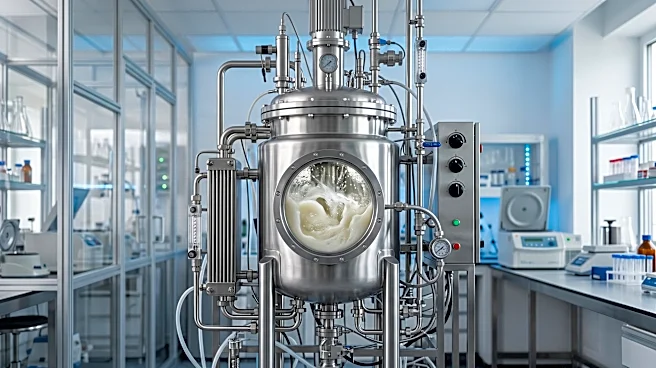
clearance to sell its animal-free whey protein in the U.S. two years prior, argues for a 'fast-track pathway' for nature-identical proteins produced with proven safe host strains and technologies. 21st.Bio's BLG Essential+ is produced using precision fermentation, where microbes like Aspergillus oryzae are engineered to produce the desired protein. This protein is designed to enhance nutrition, texture, and stability in various food formulations, from plant-based dairy to baked goods, and offers consistent, scalable, and sustainable production.
Why It's Important?
While 21st.Bio's immediate focus is on EU approval, its call for faster regulatory processes for precision-fermented proteins has significant implications for the U.S. food technology sector. The fact that 21st.Bio obtained U.S. clearance two years ago highlights the U.S. as a potentially more agile market for novel food ingredients. A streamlined regulatory pathway, as advocated by 21st.Bio, could encourage more innovation and investment in the U.S. precision fermentation industry, accelerating the availability of sustainable and alternative protein sources. This could benefit U.S. consumers by offering new food options and potentially stabilizing protein supply chains, especially given the volatility in conventional whey prices. The U.S. could further solidify its position as a leader in food tech if its regulatory environment continues to be more responsive to these advancements.
What's Next?
21st.Bio's application in the EU will be closely watched by the global precision fermentation industry, including U.S. companies. A successful and expedited approval in the EU could set a precedent for other regions, potentially influencing regulatory bodies worldwide to adopt more efficient processes for novel food ingredients. In the U.S., companies already cleared for animal-free whey protein, such as Perfect Day, Remilk, and Imagindairy, will continue to expand their market presence. The ongoing demand for protein, driven by factors like aging populations and GLP-1 users, will likely fuel further research and development in precision fermentation, leading to a wider array of animal-free protein products entering the U.S. market.
Beyond the Headlines
The debate over regulatory speed versus safety for novel food ingredients like precision-fermented proteins touches upon fundamental questions about innovation, public health, and economic competitiveness. While the U.S. has shown a willingness to approve these products, the call for faster processes globally reflects a tension between fostering technological advancement and ensuring rigorous safety standards. This development could lead to a global race to establish leadership in alternative protein production, with countries vying to attract investment and talent. It also highlights the potential for these technologies to address critical challenges such as food security and environmental sustainability, prompting a broader societal discussion about the future of our food system and the role of biotechnology in shaping it.