

What's Happening?
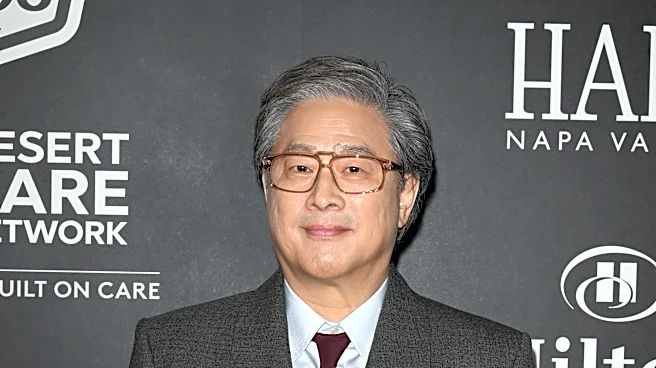
Director Park Chan-wook, known for his Vengeance Trilogy, expressed early admiration for martial arts actor Hwang Jung-lee, particularly his dynamic kicks. This appreciation was revealed in an essay by Park Chan-wook, where he recounted seeing Hwang Jung-lee's
film 'The Fixer' (1982) in theaters. Park described the film as being packed with 'terrific fight scenes,' including a memorable sequence in a public restroom and an 'unprecedentedly long fight sequence at a brick factory' showcasing Hwang Jung-lee's 'dazzling footwork.' This historical insight into Park Chan-wook's influences comes to light following the recent passing of Hwang Jung-lee, an action star who worked extensively in both Korean and Hong Kong cinema, known for his villainous roles and spectacular showdowns with actors like Jackie Chan. The essay underscores the lasting impact of Hwang Jung-lee's unique martial arts style on prominent filmmakers.
Why It's Important?
This revelation is important as it sheds light on the formative influences of a globally recognized director like Park Chan-wook. Understanding the cinematic works that captivated and inspired him, such as Hwang Jung-lee's martial arts films, provides valuable context for analyzing his own distinctive directorial style, particularly his approach to action sequences and character portrayal. For film enthusiasts and scholars, this connection offers a deeper appreciation of the cross-cultural impact of martial arts cinema and its role in shaping contemporary filmmaking. It also highlights the enduring legacy of actors like Hwang Jung-lee, whose contributions to the genre continue to resonate with and inspire new generations of filmmakers and audiences, even decades after their initial releases. The recognition from a director of Park Chan-wook's stature elevates the historical significance of Hwang Jung-lee's work.
What's Next?
The renewed attention on Hwang Jung-lee's work, spurred by tributes from figures like Park Chan-wook and Wu-Tang Clan's RZA, could lead to a resurgence of interest in his filmography. This might prompt film archives and distributors to make more of his lesser-known works, such as 'The Fixer,' accessible to a wider audience, potentially through digital restorations or re-releases. Film festivals and retrospectives might also feature Hwang Jung-lee's contributions to martial arts cinema, offering new generations a chance to experience his influential performances. Furthermore, this could encourage deeper academic and critical analysis of the connections between classic martial arts films and the stylistic choices of contemporary directors, fostering a richer understanding of cinematic evolution and influence.
Beyond the Headlines
Beyond the immediate recognition, this story underscores the often-underestimated influence of genre cinema, particularly martial arts films, on the broader landscape of global filmmaking. It highlights how specific performances and action choreography can leave a profound and lasting impression on artists across different cultures and disciplines. The fact that both a critically acclaimed director like Park Chan-wook and a hip-hop icon like RZA were captivated by Hwang Jung-lee's work speaks to the universal appeal and artistic merit found within these films. This cross-pollination of influence challenges conventional hierarchies in film appreciation, suggesting that the 'dazzling kicks' of a martial arts actor can be as artistically significant and inspiring as any other cinematic element, shaping the creative visions of future generations.