
What's Happening?
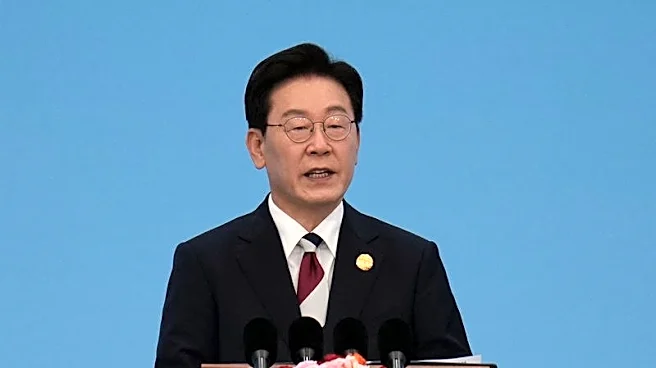
Saudi Aramco, a leading integrated energy and chemicals company, and its subsidiary S-OIL, have inaugurated the Shaheen Project in Seoul, South Korea. This $7 billion petrochemicals complex represents
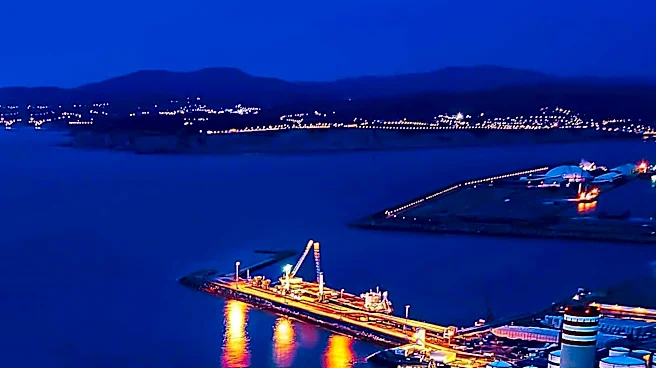
Aramco's largest investment in the country and marks a significant milestone in the 35-year strategic partnership between Aramco and S-OIL, which began with Aramco's initial investment in 1991. The project coincides with S-OIL’s 50th anniversary. The Shaheen Project integrates world-class refining capabilities with the first major commercial deployment of Aramco’s proprietary thermal crude-to-chemicals (TC2C™) technology, developed in collaboration with Lummus Technology. This technology allows for the conversion of a greater proportion of crude oil and lower-value heavy oils into chemical feedstocks. The complex includes the world’s largest single steam cracker, a propylene fractionator, crude-to-chemicals conversion facilities, and polymer production units. Commercial operations are slated to begin in 2027 following commissioning.
Why It's Important?
This substantial investment by Saudi Aramco in South Korea underscores a long-term strategic vision for expanding downstream operations and increasing the value derived from oil-based production. The Shaheen Project is expected to significantly boost S-OIL's annual petrochemical production capacity by approximately 3.2 million tons, positioning the company as a key global supplier of high-value polymers and advanced materials. The deployment of Aramco’s TC2C™ technology is crucial as it enhances the integration of refining and petrochemical processes, allowing S-OIL to process a wider range of feedstocks while reducing operating costs and energy intensity. This expansion is projected to increase the share of petrochemicals in S-OIL's overall business portfolio from 12% to 25%, diversifying its operations beyond traditional refining and strengthening its international competitiveness. The project also aims to provide a stable domestic supply of basic petrochemical feedstocks to nearby downstream companies in Ulsan, reducing their reliance on imports and logistics, thereby strengthening the broader petrochemical value chain and contributing to the development of Ulsan’s industrial ecosystem.
What's Next?
Commercial operations for the Shaheen Project are scheduled to commence in 2027, following the completion of commissioning. This will mark the full operationalization of Aramco’s largest investment in South Korea, bringing its advanced thermal crude-to-chemicals technology to full commercial scale. The project is expected to solidify S-OIL's position in the global petrochemical market, with a significant increase in its production capacity and a greater focus on high-value polymers and advanced materials. The integration with S-OIL’s existing refining and petrochemical facilities in Ulsan is anticipated to create further synergies within the Ulsan petrochemical complex. The project's success will likely influence future investment strategies for Aramco and other major energy companies looking to diversify their portfolios and enhance value creation from crude oil through advanced chemical conversion technologies. The long-term impact will be closely watched by industry stakeholders as it could set a precedent for similar large-scale integrated projects globally.
Beyond the Headlines
The Shaheen Project represents more than just a significant financial investment; it signifies a strategic shift towards greater integration of refining and petrochemical operations, driven by technological innovation. The deployment of Aramco’s proprietary TC2C™ technology at a commercial scale highlights a broader industry trend towards maximizing the value of crude oil by converting it into higher-value chemical products, rather than solely focusing on fuel production. This move is particularly relevant in a global energy landscape that is increasingly scrutinizing carbon footprints and seeking more efficient resource utilization. By reducing operating costs and energy intensity, the project aligns with sustainability goals, even within the fossil fuel industry. Furthermore, the project's role in strengthening South Korea's industrial ecosystem and reducing reliance on imports for petrochemical feedstocks underscores the geopolitical and economic implications of such large-scale investments, fostering greater energy independence and industrial resilience for the host nation.