









What's Happening?
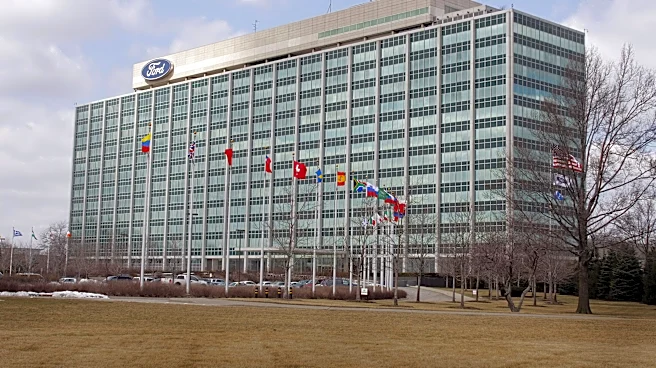
Several corporations, including Ford and the Commonwealth Bank of Australia, are reversing their decisions to replace human workers with artificial intelligence (AI) systems. Ford has rehired hundreds of experienced engineers to address quality issues
that automated systems failed to manage effectively. Similarly, the Commonwealth Bank of Australia had to reinstate over 40 customer service positions after an AI voice bot could not handle the volume of calls, leading to increased customer dissatisfaction. These reversals highlight a growing trend where companies are recognizing the limitations of AI and the necessity of human oversight in certain roles. According to a report by Robert Half, 32% of U.S. hiring managers who eliminated roles due to AI later rehired for the same or similar positions.
Why It's Important?
This development underscores the challenges and limitations of relying solely on AI for business operations. While AI can enhance efficiency, it is not a complete substitute for human judgment and expertise. The trend of rehiring workers suggests that companies are beginning to value a collaborative approach, integrating human skills with AI capabilities. This shift could influence future hiring practices and workforce strategies, emphasizing the importance of human oversight in AI-driven processes. The move also reflects a broader industry realization that cutting human resources in favor of AI may not always lead to the desired productivity gains and could potentially harm customer satisfaction and business growth.
What's Next?
As companies reassess their reliance on AI, there may be a broader industry shift towards balancing AI integration with human oversight. Businesses might invest more in training and upskilling employees to work alongside AI systems effectively. This could lead to a more sustainable approach to automation, where human and AI capabilities are leveraged together to optimize performance. Additionally, companies may become more cautious in making workforce reductions based solely on AI capabilities, considering the potential need for human intervention in complex or nuanced tasks.