





What's Happening?
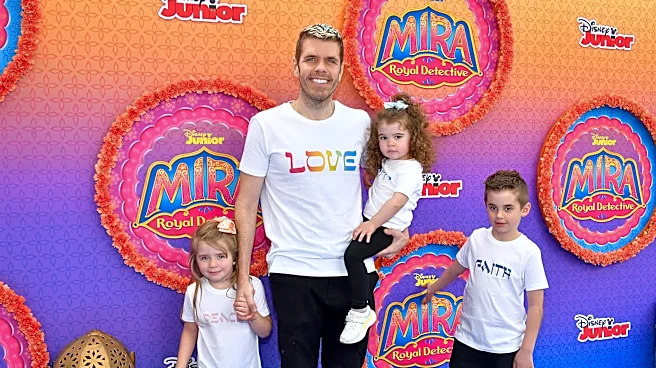
Christopher French, husband of actress Ashley Tisdale, has publicly supported his wife amidst the fallout from her viral article about a 'toxic mom group.' Tisdale had written a piece for 'The Cut' in January, detailing her decision to end friendships
with a group of mothers she had known since her oldest daughter was born in 2021. She described their behavior as 'mean girl' and claimed she was excluded from plans, ultimately severing ties via a group text message stating, 'This is too high school for me.' French, who hosts the 'Recovering' podcast, told Page Six that he stands firmly by Tisdale, praising her as a 'super smart, capable person' and affirming that she knows how to handle her interpersonal relationships. While Tisdale never explicitly named her former friends, speculation arose that Hilary Duff, Mandy Moore, and Meghan Trainor were part of the group, with Duff publicly refuting the accuracy of Tisdale's account.
Why It's Important?
This situation highlights the complexities of adult friendships, particularly among mothers, and the public scrutiny that celebrities face when personal conflicts become public. Ashley Tisdale's decision to share her experience in an open letter resonated with many, sparking conversations about 'mom group' dynamics, social exclusion, and the emotional toll of maintaining toxic relationships. Christopher French's public support is significant as it reinforces the importance of spousal backing during personal challenges, especially when navigating public criticism. The controversy also underscores the power of celebrity platforms in shaping public discourse on social issues, even those as seemingly personal as friendship breakups. It prompts a broader reflection on how individuals, particularly women, navigate social circles and assert their boundaries, and the potential for such personal narratives to influence collective understanding of healthy relationships.
What's Next?
It is anticipated that Ashley Tisdale and Christopher French will continue to address these topics, possibly through French's podcast, where Tisdale has already discussed her struggles with postpartum depression. Their continued openness could further fuel discussions about mental health in motherhood and the importance of supportive social networks. The public's reaction to Tisdale's initial article and French's subsequent defense suggests an ongoing interest in these themes, potentially leading to more celebrities sharing similar experiences. This could contribute to a larger cultural shift towards greater transparency about the challenges of parenthood and the need for authentic, supportive relationships. The incident may also encourage individuals to re-evaluate their own social circles and prioritize their well-being, potentially leading to more candid conversations about friendship dynamics in various communities.
Beyond the Headlines
The 'toxic mom group' drama, as articulated by Ashley Tisdale and supported by Christopher French, delves into the deeper sociological aspects of female friendships and the pressures faced by mothers in contemporary society. The concept of 'mean girl behavior' extending into adulthood, particularly within groups formed around shared parental experiences, reveals persistent social dynamics that can undermine support systems. This incident prompts a critical examination of how societal expectations placed on mothers, combined with the often-isolated nature of early parenthood, can create environments where unhealthy social patterns emerge. It also touches upon the ethical considerations of publicizing personal conflicts, especially when it involves unnamed individuals who may be identifiable. The broader implication is a call for greater authenticity, empathy, and self-preservation within social circles, encouraging individuals to prioritize their mental and emotional health over maintaining superficial or detrimental relationships, thereby fostering more genuine and supportive communities.