





What's Happening?
National Economic Council Director Kevin Hassett's optimistic forecast on beef prices has been criticized for ignoring the complexities of the cattle cycle. Hassett suggested that relief from high beef prices is imminent, but experts argue that the biological
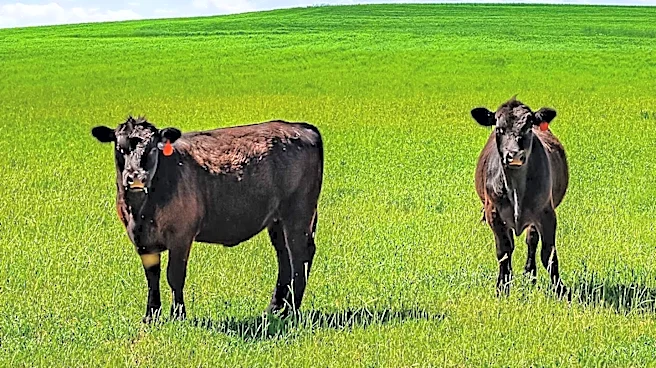
timeline of cattle production makes quick changes unlikely. The cattle cycle involves a lengthy process of herd rebuilding, which can take years. Current data shows that while the overall cattle inventory has slightly increased, the number of beef cows and calves has decreased, indicating that beef production will remain constrained in the near term.
Why It's Important?
The misunderstanding of the cattle cycle highlights the challenges in addressing food price inflation. Beef prices have been rising significantly, contributing to broader concerns about food affordability. Hassett's comments may reflect a gap between political messaging and agricultural realities, which could affect consumer expectations and market dynamics. Understanding the cattle cycle is crucial for policymakers and stakeholders in making informed decisions about agricultural policies and market interventions.
Beyond the Headlines
The push for mandatory country-of-origin labeling (MCOOL) adds another layer of complexity. While intended to support U.S. producers, MCOOL could inadvertently tighten cattle supplies by complicating the import process. This policy tension underscores the need for a balanced approach that considers both domestic production and international trade dynamics. The ongoing debate over MCOOL and beef prices may influence future agricultural policy decisions and trade relations.