








What's Happening?
Walmart has launched new 'Agent Profiles' and an 'Agent Gateway' to facilitate AI agents in making purchases on behalf of consumers. This system allows shoppers to authorize AI agents, set spending limits, and track purchases, with options for single-purchase
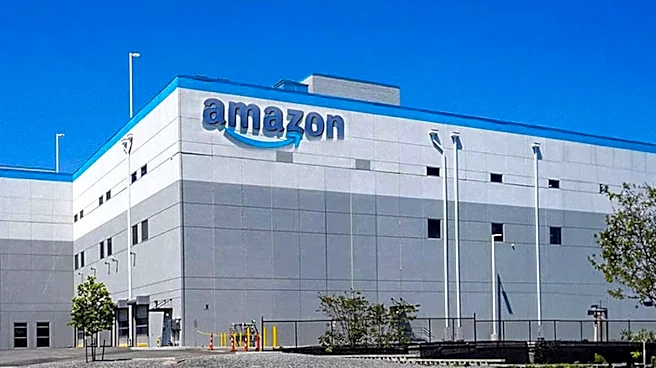
approval or preset spending caps. Walmart's framework ensures that AI agents have dedicated identities within customer accounts, preventing their purchases from mixing with a shopper's regular order history. The Agent Gateway uses an open standard, the Model Context Protocol, to enable approved agents to query inventory and execute checkouts efficiently. In contrast, Amazon has adopted an opposing stance, blocking external AI agents like Meta's Muse, ChatGPT, and Claude from accessing its site. Amazon cites unauthorized access and violations of its Conditions of Use as reasons, emphasizing its focus on maintaining control over the customer relationship and its advertising-driven browsing experience. This divergence highlights a significant split in how major retailers are approaching the emerging field of agentic commerce.
Why It's Important?
This development marks a critical juncture in the evolution of e-commerce, with significant implications for U.S. industries, particularly retail and technology. Walmart's open approach could accelerate the adoption of agentic commerce, potentially transforming how consumers shop and how brands market their products. By providing a structured environment for AI agents, Walmart aims to build consumer trust through transparency and control, which could become a new standard for customer loyalty. For brands, this means a shift in marketing strategies, as optimizing for AI algorithms will become as crucial as traditional search engine optimization. Amazon's restrictive stance, while protecting its existing advertising revenue model, risks ceding the AI-agent layer to competitors. This creates a dilemma for other retailers: whether to embrace openness for new distribution channels or protect legacy revenue models. The decision made by these retail giants will influence how other sectors, such as real estate and financial services, integrate AI into high-trust transactions.
What's Next?
The contrasting strategies of Walmart and Amazon will likely force other U.S. retailers and businesses to decide their approach to agentic commerce. Industry analysts predict that the U.S. agentic commerce market could reach $300-500 billion by 2030, accounting for 15-25% of total e-commerce sales. Gartner projects that 20% of digital commerce transactions will be executed through AI platforms by 2030. This rapid growth suggests that businesses need to audit their e-commerce infrastructure to determine how AI agents might interact with their storefronts. Marketing teams will need to develop 'answer engine optimization' strategies to ensure their products are visible and appealing to AI agents. Furthermore, the emphasis on trust and control features, such as spending limits and revocable permissions, will become core product requirements for any company engaging with agentic systems. The ongoing competition between open and closed AI commerce models will shape consumer expectations and technological advancements in the coming years.
Beyond the Headlines
The emergence of agentic commerce raises profound ethical and legal questions regarding consumer autonomy, data privacy, and algorithmic bias. Walmart's focus on control mechanisms, such as spending caps and revocable access, addresses consumer concerns about AI overspending or misuse of data, establishing a precedent for responsible AI integration in commerce. However, the broader implications extend to how AI agents might influence consumer choices, potentially leading to a less diverse marketplace if algorithms prioritize certain brands or products. The 'marketing to algorithms' shift could also exacerbate existing inequalities if smaller businesses lack the resources to optimize for AI visibility. Moreover, the legal framework for transactions initiated by AI agents is still nascent, posing challenges related to liability and consumer protection. The tension between convenience and control, and the balance between innovation and regulation, will be central to the long-term societal impact of agentic commerce.