







What's Happening?
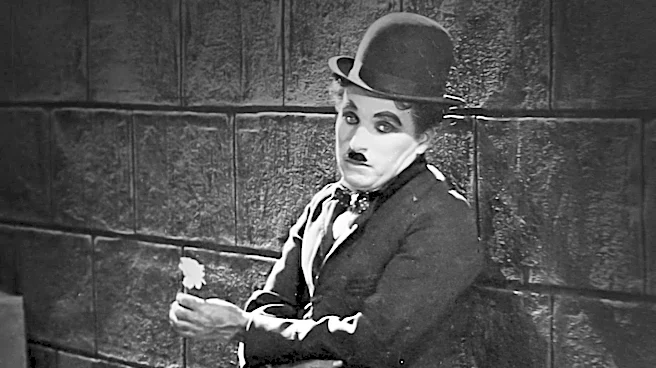
The enduring quote, 'A day without laughter is a day wasted,' is frequently attributed to iconic actor Charlie Chaplin, despite historical research suggesting its origins predate him. Chaplin, a British-born actor known for his 'Little Tramp' persona,
remains a significant figure in cinema history, celebrated for his distinctive physical comedy and ability to infuse humor into narratives of hardship. The quote's sentiment aligns strongly with Chaplin's cinematic legacy, where he consistently portrayed characters who found relief and perspective through laughter, even when facing poverty, loneliness, and social inequality. His films, such as 'The Kid,' 'City Lights,' and 'Modern Times,' often blended comedy with serious depictions of societal challenges, demonstrating how humor could provide connection and hope in difficult circumstances. While the precise wording of the quote may not have originated with Chaplin, its message deeply resonates with the themes and emotional range present throughout his extensive body of work.
Why It's Important?
The continued association of this quote with Charlie Chaplin underscores the profound cultural impact of his work and his philosophy on life. It highlights how art, particularly comedy, can offer a powerful lens through which to process and cope with adversity. Chaplin's ability to extract humor from challenging situations, as seen in his portrayals of the Little Tramp, provided audiences with both entertainment and a deeper understanding of the human condition. This legacy is important because it reinforces the idea that laughter is not merely a frivolous pastime but a vital component of resilience and well-being. In a broader societal context, Chaplin's work demonstrated how entertainment could address serious social issues, making complex themes accessible and relatable to a wide audience. The quote, regardless of its exact origin, serves as a timeless reminder of the value of humor in navigating life's difficulties, a message that continues to resonate across generations and cultures.
What's Next?
The ongoing discussion surrounding the attribution of the quote 'A day without laughter is a day wasted' is likely to continue, fueled by both historical research and popular cultural memory. While Quote Investigator has traced the sentiment back to French writer Nicolas Chamfort in the late 18th century, Chaplin's strong connection to the message ensures its continued association with him. Future analyses of Chaplin's work will likely further explore how his films embodied this philosophy, examining the interplay between comedy and social commentary. Educational institutions and film historians will continue to delve into his techniques for using humor to address themes of poverty, industrialization, and social injustice. The quote itself will probably remain a popular adage, serving as a touchstone for discussions about the role of laughter in human experience and the enduring power of Chaplin's artistic contributions.
Beyond the Headlines
The enduring popularity of the quote, despite its complex attribution, reveals a deeper cultural phenomenon: the tendency to associate profound sentiments with iconic figures who embody those ideals. In Chaplin's case, his entire career was dedicated to demonstrating the power of laughter in the face of adversity, making him the perfect, albeit perhaps not original, spokesperson for the sentiment. This highlights how cultural narratives can sometimes prioritize symbolic resonance over strict historical accuracy. Furthermore, Chaplin's work transcended mere entertainment, offering a form of social critique that used humor to challenge authority and highlight societal inequalities. This aspect of his legacy underscores the ethical dimension of comedy, demonstrating its potential to foster empathy and provoke thought. The quote, therefore, is not just about personal well-being but also reflects a broader understanding of comedy as a tool for social commentary and human connection, a concept deeply embedded in Chaplin's artistic vision.