





What's Happening?
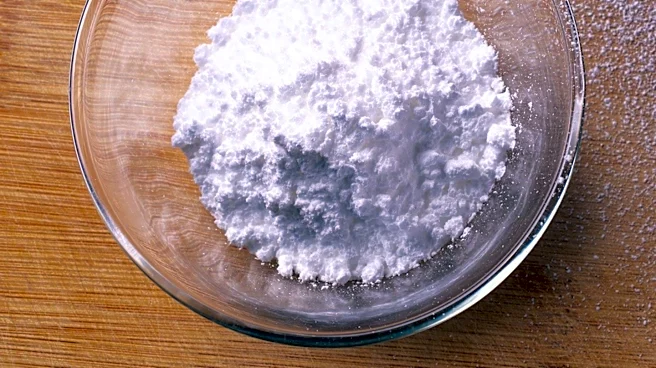
Johnson & Johnson has announced a settlement agreement to pay approximately $5.5 billion to resolve tens of thousands of lawsuits alleging that its talc products, including baby powder, cause ovarian cancer. This settlement covers about 76,000 claims,
including those consolidated in federal court in New Jersey and related state court cases. The agreement comes after a decade-long legal battle, with J&J previously settling most cases related to asbestos and mesothelioma claims. The settlement requires acceptance by 95% of the ovarian cancer claimants in state or federal court to become final. J&J's vice president of litigation, Erik Haas, stated that the company believes the claims are meritless but chose to settle to focus on its core mission. The settlement could potentially exceed $7 billion, depending on participation, and assigns specific values to qualifying claims without capping J&J's total payout.
Why It's Important?
This settlement is significant as it potentially concludes a long-standing legal issue for Johnson & Johnson, allowing the company to move forward without the distraction of ongoing litigation. The resolution of these claims could impact the company's financials, with payments expected to begin in 2027. For the plaintiffs, this settlement provides a resolution and compensation for their claims, although it does not address future lawsuits. The case highlights the challenges companies face with product liability and the importance of consumer safety. It also underscores the legal complexities involved in mass tort litigation and the potential financial implications for large corporations.
What's Next?
The settlement awaits acceptance by a majority of the claimants, which will determine its finalization. If accepted, J&J will begin making payments in 2027, with further payments in 2028. The company will continue to face scrutiny over its product safety practices, and the resolution of these claims may influence how it handles future product liability issues. Additionally, the settlement does not cover future claims, leaving the door open for potential new lawsuits if similar allegations arise.