

What's Happening?
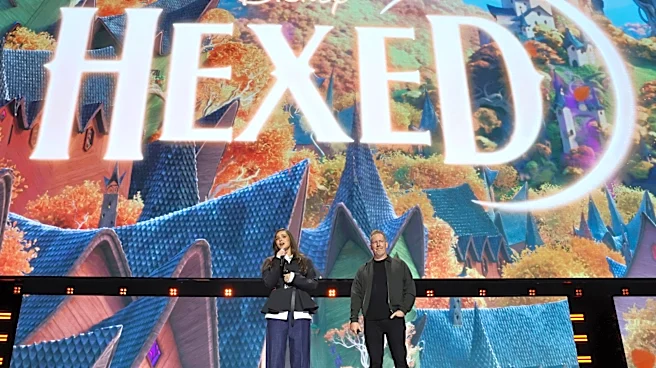
Disney's latest original animated film, 'Hexed,' earned $32 million over the five-day Thanksgiving holiday and $20 million during the weekend, with a global total of $57 million. This performance is considered disastrous given its $200 million budget.
This follows a trend of underperforming original animated features for Disney post-COVID, including 'Elio' ($154.3 million globally in 2025), 'Wish' ($255 million globally in 2023), 'Strange World' ($73.6 million globally in 2022), and 'Encanto' ($261.3 million in 2021). While some of these films faced challenges like pandemic releases or hybrid streaming strategies, the consistent underperformance of non-franchise animated movies is a significant concern for the studio. In contrast, Disney's franchise sequels, such as 'Toy Story 5,' 'Inside Out 2,' 'Zootopia 2,' and 'Moana 2,' have achieved blockbuster status, each surpassing $1 billion at the box office.
Why It's Important?
The continued struggle of Disney's original animated films to achieve profitability has significant implications for the animation industry and Disney's long-term strategy. Animated movies are costly and time-consuming to produce, often carrying budgets around $200 million plus tens of millions for marketing. To be profitable, a film needs to gross more than double its production and marketing costs, as theaters retain half of ticket sales. The current box office returns for original animated features are not justifying this investment, potentially leading Disney to re-evaluate its approach to new intellectual property. This trend suggests a growing reliance on established franchises, which, while financially successful, could stifle creative innovation and the development of new characters and stories that have historically been a cornerstone of Disney's appeal. The challenge lies in balancing the need for new content to replenish its film library and merchandising ecosystem with the high financial risks involved.
What's Next?
Disney will likely continue to invest in original animated stories, as the creation of new intellectual property is crucial for its long-term growth, including theme park attractions and merchandise. However, the studio may explore more economically viable production models for these original films to mitigate financial risks. There could be a strategic shift towards developing new concepts with lower budgets or exploring alternative distribution strategies that better align with audience preferences. The success of upcoming franchise sequels like 'Inside Out 2,' 'Zootopia 2,' and 'Moana 2' will likely reinforce the studio's current dual strategy of leveraging existing popular franchises while cautiously experimenting with new narratives. Disney will need to find a way to reignite audience interest in original animated content to ensure a sustainable pipeline of new characters and stories for future generations.
Beyond the Headlines
The underperformance of original animated films like 'Hexed' points to a broader industry challenge in an evolving entertainment landscape. The high cost of animation, coupled with changing audience consumption habits and increased competition from streaming services, creates a difficult environment for launching new intellectual property. This situation could lead to a more conservative approach across the animation industry, with studios prioritizing proven franchises over original concepts. Furthermore, the 'culture wars lunacy' mentioned in the source as potentially overshadowing artistry highlights an external factor that can impact a film's reception, adding another layer of complexity for creators. The long-term implication is a potential reduction in diverse storytelling and character development if studios become overly risk-averse, ultimately impacting the creative vibrancy of animated cinema and the cultural impact of new narratives.