






What's Happening?
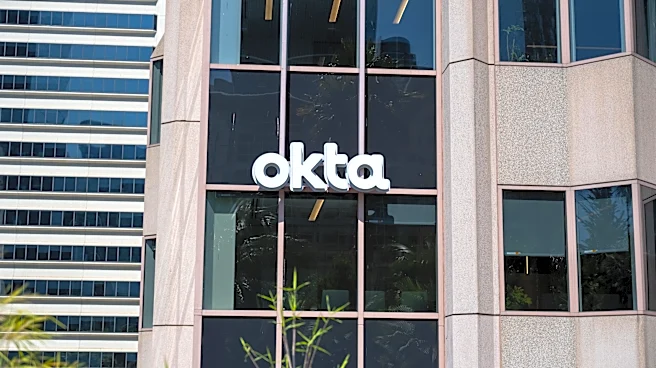
Okta, a prominent identity security company, has experienced a 10.4% drop in its stock price over the past month. This decline outpaces the broader Zacks Computer & Technology sector's 16.8% decrease. The market's reaction stems from several factors,
including moderating near-term growth projections, anticipated margin contraction, and heightened competition within the identity security market. Additionally, there is uncertainty surrounding the monetization strategies for AI security solutions, which is contributing to investor caution. Despite reporting strong fiscal second-quarter 2027 results, Okta's outlook for the fiscal third quarter indicates a slowdown in growth. The company forecasts revenues between $813 million and $817 million, representing a 10% year-over-year increase, a slight dip from the 11% growth observed in the preceding quarter. Current remaining performance obligations (cRPO) are also expected to see a moderated increase of 11-12% year over year, compared to 14% growth in the second quarter. These projections suggest a period of adjustment for the company as it navigates a dynamic market landscape.
Why It's Important?
The recent stock performance of Okta is significant for the broader cybersecurity and technology sectors, as it highlights investor sensitivity to growth moderation and competitive pressures even within high-demand areas like identity security. Okta's challenges reflect a broader trend where even established players face scrutiny over their ability to sustain rapid growth and effectively monetize emerging technologies like AI security. The intensifying competition from tech giants such as Microsoft, CrowdStrike, and Cisco Systems underscores the competitive landscape, where companies are vying for market share in critical security domains. For investors, Okta's premium valuation, as indicated by its forward 12-month price/sales ratio of 10.08X compared to the sector median of 4.39X, suggests that expectations for future growth are high. Any signs of deceleration can lead to significant stock price adjustments. The company's ability to effectively integrate and monetize its AI agent security solutions will be crucial in maintaining its competitive edge and justifying its valuation in the long term, impacting its standing in the enterprise security market.
What's Next?
Okta's immediate future will likely involve a focus on demonstrating the value and revenue potential of its newer product offerings, particularly in the AI agent security space. The company has been actively expanding its portfolio with solutions like Okta Identity Governance, Okta Privileged Access, Identity Threat Protection, and Identity Security Posture Management, which are designed to enhance cross-selling opportunities. The success of these newer products, which accounted for approximately 30% of bookings in the fiscal second quarter, will be critical in offsetting moderating growth in its core offerings. Investors will be closely watching the company's fiscal third-quarter earnings report for signs of stabilization in revenue growth and improvements in operating margins. Okta's continued investments in product innovation, sales capabilities, and AI security solutions are expected to limit near-term margin expansion, but these investments are crucial for long-term growth. The company's ability to secure more multi-million dollar AI-related deals, similar to its agreement with a Fortune 50 healthcare company, will be a key indicator of its success in capitalizing on the growing enterprise AI investments. Furthermore, how Okta differentiates itself from competitors like Microsoft and CrowdStrike in the evolving identity security market will shape its trajectory.
Beyond the Headlines
Beyond the immediate financial metrics, Okta's current situation highlights the evolving landscape of cybersecurity, particularly with the rise of AI. The demand for AI agent security is creating new opportunities, but also new challenges for companies like Okta. The ability to discover, govern, and secure AI agents across diverse technology environments is becoming a critical need for enterprises. Okta's efforts in this area, including the release of 25 major features since April such as shadow AI agent discovery for endpoints and Agent Gateway, signify a strategic shift towards addressing these emerging threats. The broader implication is that identity management is expanding beyond human users to include autonomous AI agents, fundamentally altering the scope of enterprise security. This shift presents both a significant market expansion and a complex technical challenge. Companies that can effectively secure these non-human identities will likely gain a substantial competitive advantage. The ethical and operational implications of securing AI agents, ensuring their integrity, and preventing misuse are also becoming increasingly important considerations for the industry as a whole.