



What's Happening?
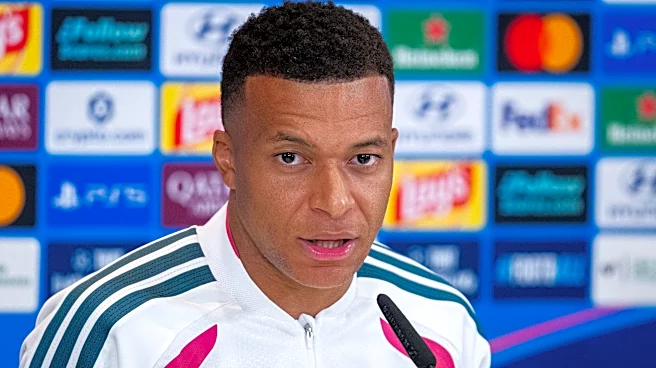
Manchester United reportedly passed on the opportunity to sign Kylian Mbappé in 2015, despite a recommendation from then-coach Ryan Giggs. Giggs, who was part of Louis van Gaal's coaching staff, received a tip about a promising young player at Monaco
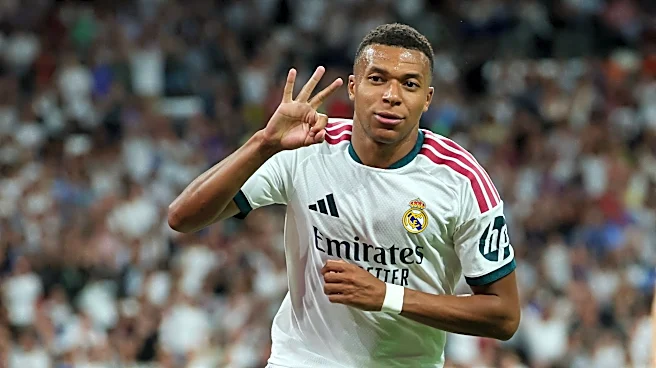
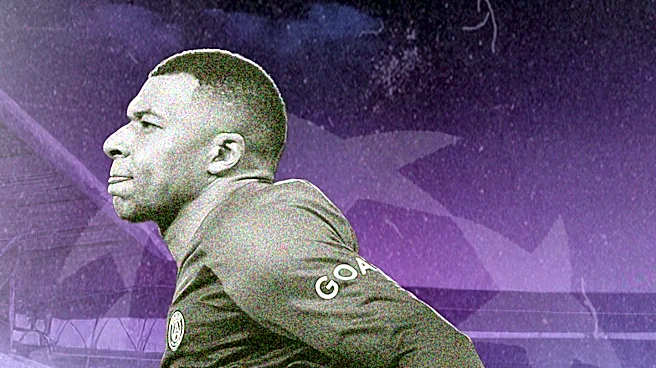
named Kylian Mbappé from a French contact. After personally observing Mbappé in youth games, Giggs and fellow assistant Albert Stuivenberg were impressed by his exceptional talent. They subsequently informed the club's scouting team. However, a scout sent to watch Mbappé play against PSG was reportedly 'not too sure about him,' leading Manchester United to decline pursuing the transfer. Mbappé later made his senior breakthrough at Monaco, helping them win the Ligue 1 title in 2017, before moving to Paris Saint-Germain for a significant transfer fee and achieving World Cup glory with France. He eventually joined Real Madrid in 2024.
Why It's Important?
This missed transfer opportunity highlights the significant financial and sporting implications of scouting decisions in professional football. For Manchester United, failing to secure Mbappé, who has since become one of the world's leading forwards, represents a substantial loss in potential talent and market value. Mbappé's subsequent success at PSG, Real Madrid, and with the French national team, including multiple FIFA World Cup Golden Boots, underscores the magnitude of the oversight. Such decisions can impact a club's competitive standing, fan engagement, and long-term financial health through missed revenue from player sales, merchandise, and prize money associated with top-tier performance. It also serves as a cautionary tale for football clubs regarding the subjective nature of talent evaluation and the potential for scouts to misjudge future superstars.
What's Next?
While Manchester United cannot reverse the past decision regarding Mbappé, the incident serves as a historical lesson for their future scouting and recruitment strategies. Clubs continuously refine their talent identification processes to avoid similar missed opportunities. For Mbappé, his career continues to evolve at Real Madrid, where he has expressed a clear priority of winning the Champions League over individual honors like the Ballon d'Or. His ongoing performance will continue to shape his legacy and influence the transfer market for other emerging talents. The narrative of clubs missing out on future stars will likely persist, prompting ongoing discussions about the effectiveness of scouting networks and the pressures on young players.
Beyond the Headlines
The story of Manchester United's decision not to sign Mbappé delves into the inherent risks and subjective judgments involved in professional sports scouting. It raises questions about the criteria used to evaluate young talent and the potential for short-term assessments to overlook long-term potential. The incident also touches upon the psychological aspect of talent identification, where a single scout's 'uncertainty' can alter the trajectory of a player's career and a club's fortunes. Furthermore, it highlights the broader trend in modern football where top talents command exorbitant transfer fees, making early identification and acquisition crucial for financial prudence and competitive advantage. The narrative contributes to the lore of 'what-if' scenarios in football, emphasizing how pivotal moments can shape the sport's landscape.