






What's Happening?
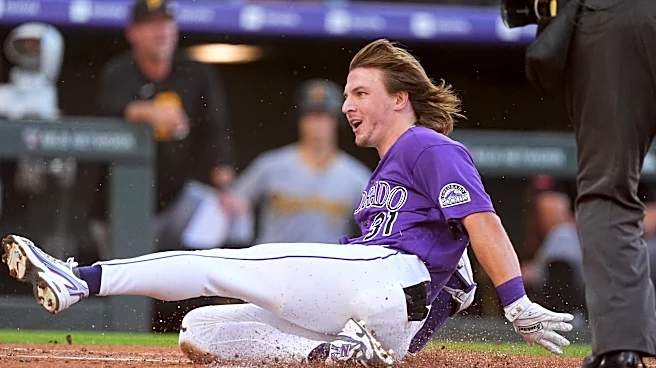
In a recent MLB game, the Pittsburgh Pirates faced a controversial loss against the Colorado Rockies due to an unusual interference call. The incident occurred when pinch-runner Billy Cook's cleat grazed the glove of third baseman Kyle Karros on a slow
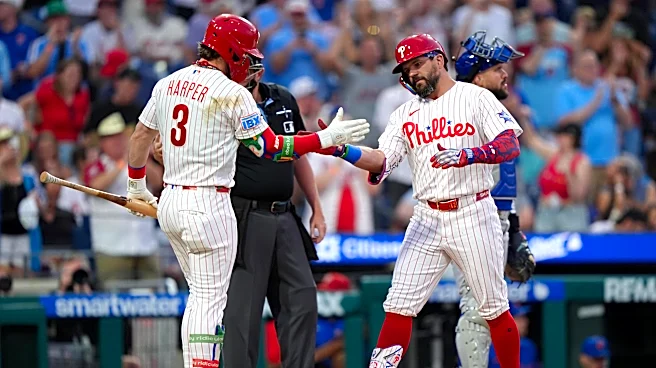
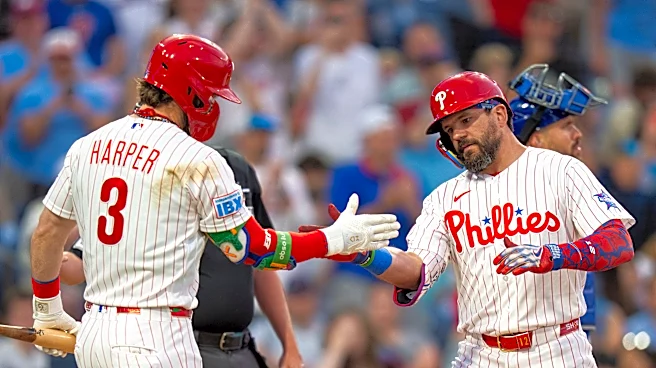
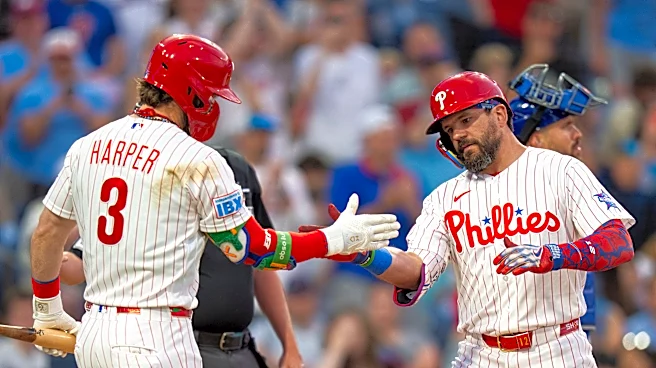
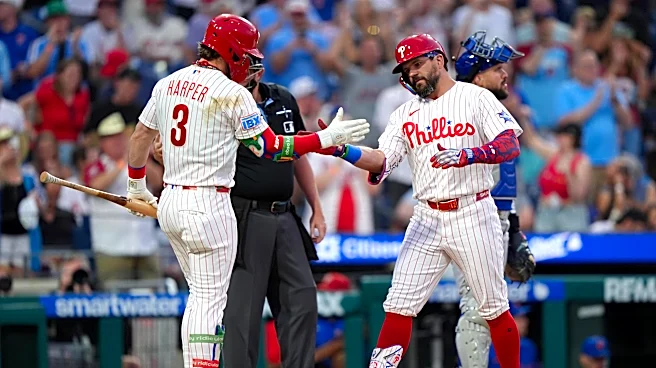
ground ball, which would have tied the game. The umpires conferred and ruled it as interference, resulting in a 2-1 victory for the Rockies. This decision marked the seventh consecutive start without a win for Pirates pitcher Paul Skenes, despite his strong performance. Meanwhile, in another game, Philadelphia Phillies' Kyle Schwarber and Bryce Harper delivered standout performances against the New York Mets. Schwarber hit three home runs, while Harper hit for the cycle, contributing to a 15-3 victory for the Phillies.
Why It's Important?
The interference call against the Pirates underscores the impact of umpire decisions on game outcomes, which can significantly affect team standings and player statistics. For fantasy baseball enthusiasts, such calls can alter player valuations and game predictions. The performances of Schwarber and Harper highlight their offensive prowess and potential impact on the Phillies' season. Schwarber's home run surge and Harper's cycle are notable achievements that can boost their fantasy value and influence team dynamics. These events illustrate the unpredictable nature of baseball, where individual moments can have broader implications for teams and players.
What's Next?
The Pirates will need to regroup and address their current challenges, including their reliance on key players like Oneil Cruz and Konnor Griffin, who are currently absent. The team must find ways to overcome their recent string of bad luck and improve their standings. For the Phillies, maintaining the momentum from Schwarber and Harper's performances will be crucial as they continue their season. Fantasy baseball managers will be closely monitoring these players' performances and adjusting their strategies accordingly. The league will also continue to scrutinize umpire decisions, as they can have significant ramifications on game outcomes.