







What's Happening?
The new 'Hunger Games' prequel film, 'Sunrise on the Reaping,' dramatizes Haymitch Abernathy's experience in the 50th Hunger Games. Australian actor Joseph Zada portrays the 16-year-old Haymitch, a character previously played by Woody Harrelson in the original
series. The film delves into the character's transformation from a fresh-faced individual to the embittered figure seen later. Directed by Francis Lawrence, the movie features a cast including Jesse Plemons, Ralph Fiennes, Glenn Close, Kieran Culkin, Elle Fanning, Mckenna Grace, Maya Hawke, Whitney Peak, and Kelvin Harrison Jr. The narrative explores the 'bureaucracy of evil,' the exploitation of child murder for entertainment, and the use of fear as a control mechanism, themes central to the 'Hunger Games' franchise. The film's aesthetic is described as serving a 1970s vibe, blending psychedelia with elements reminiscent of 'Logan's Run,' and features a comically inverted Disney-like forest arena designed for maximum horror.
Why It's Important?
This prequel is significant for 'Hunger Games' fans as it provides crucial backstory for a beloved character, Haymitch, offering insights into the events that shaped him. For the film industry, it represents the continued expansion of successful franchises through prequels, aiming to capitalize on established fan bases and intellectual property. The film's exploration of themes like the 'bureaucracy of evil' and the commodification of violence remains relevant in contemporary discussions about media consumption and societal control. The casting of younger versions of established characters, like Jesse Plemons as a revolutionary Plutarch Heavensbee and Elle Fanning as Effie Trinket, aims to bridge the narrative gap between the prequel and the original series, maintaining continuity and engaging audiences with familiar elements in new contexts. Its success or failure could influence future decisions regarding franchise extensions and character-focused spin-offs in Hollywood.
What's Next?
As a prequel, 'Sunrise on the Reaping' provides a deeper understanding of the 'Hunger Games' universe and its characters, but its direct narrative impact on future installments is limited, as it fills in past events. The film's reception will likely influence whether further prequels or spin-offs are developed within the franchise. The critical and commercial performance will be closely watched by studios considering similar strategies for their own established properties. The movie's themes, particularly its commentary on societal control and media spectacle, will continue to resonate with audiences and critics, potentially sparking further discussions on these topics. The film's ending, which reportedly includes 'bland speeches about resistance and playing the long game' and a 'wincing coda that trots out the original actors,' suggests an attempt to connect with the original series while also hinting at the enduring struggle against the Capitol.
Beyond the Headlines
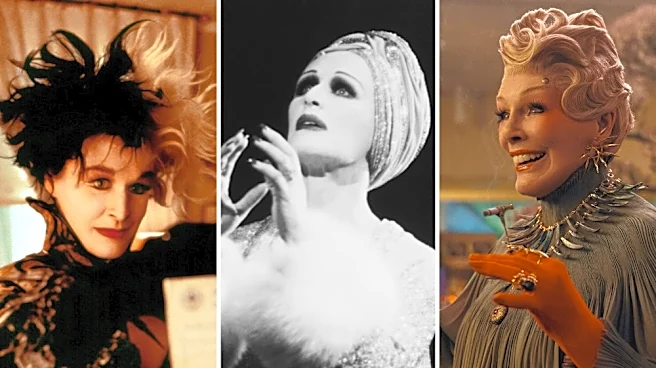
The film's portrayal of the Capitol's 'elitism and excess' and the 'nightmare plastic surgery' of characters like Glenn Close's villain offers a pointed, albeit dulled by contemporary reality, commentary on societal vanity and the pursuit of power. The movie's ability to make the audience complicit in enjoying the spectacle of the Hunger Games, much like the citizens of Panem, raises ethical questions about entertainment and its consumption. This self-awareness within the narrative challenges viewers to reflect on their own engagement with media that might sensationalize violence or suffering. The film's aesthetic choices, such as the 1970s setting and the inverted Disney-like arena, contribute to a deeper cultural critique, suggesting that the roots of such dystopian realities can be found in various historical and cultural contexts. The movie's exploration of 'no future is inevitable' as a thesis, despite evidence to the contrary, speaks to the enduring human desire for hope and resistance in oppressive systems.