






What's Happening?
The global Actuators-Rotary Hydraulic market is projected to grow significantly by 2035, driven by increased investments in industrial automation and semiconductor manufacturing. According to a report by IndexBox, the market is expected to expand at a compound
annual growth rate (CAGR) of 4-6% through 2035. This growth is attributed to the need for replacing aging hydraulic equipment and the rising demand for precision positioning in electronics assembly and wafer handling. The market is seeing a shift towards integrated actuator-driver units that simplify installation and enable predictive maintenance. Asia is identified as the largest production hub and a significant demand center, while Europe and North America remain net importers of mid- to high-torque rotary actuators.
Why It's Important?
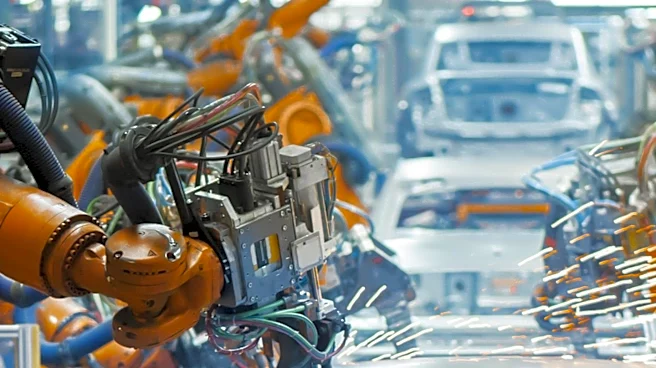
The expansion of the Actuators-Rotary Hydraulic market is crucial for several industrial sectors, particularly those involved in automation and semiconductor manufacturing. As industries continue to automate, the demand for precise and reliable actuators increases, supporting advancements in smart factories and robotics. The semiconductor industry, which is expanding globally, particularly benefits from this growth due to the need for high-precision equipment in chip fabrication. This market growth also highlights the importance of maintaining a stable supply chain for raw materials, as fluctuations in costs can impact procurement and production. The shift towards integrated systems with predictive maintenance capabilities reflects a broader trend towards lifecycle cost optimization, which can lead to significant savings for industries reliant on these technologies.
What's Next?
Looking forward, the market is expected to continue its growth trajectory, supported by ongoing investments in industrial automation and semiconductor manufacturing. The demand for high-torque actuators in harsh environments, such as oil and gas, is likely to sustain. However, potential challenges include supply chain disruptions due to geopolitical tensions and raw material price volatility. The market may also face competition from electric and pneumatic actuators in low-torque applications. Stakeholders in the industry will need to focus on innovation and efficiency to maintain competitiveness and meet the evolving demands of their customers.
Beyond the Headlines
The development of the Actuators-Rotary Hydraulic market also raises considerations around environmental regulations and energy efficiency. As industries seek to reduce their carbon footprint, the demand for energy-efficient and low-leakage actuator designs is likely to increase. This trend aligns with global efforts to address climate change and promote sustainable industrial practices. Additionally, the integration of IoT sensors for predictive maintenance not only enhances operational efficiency but also supports the broader digital transformation of industries.