



What's Happening?
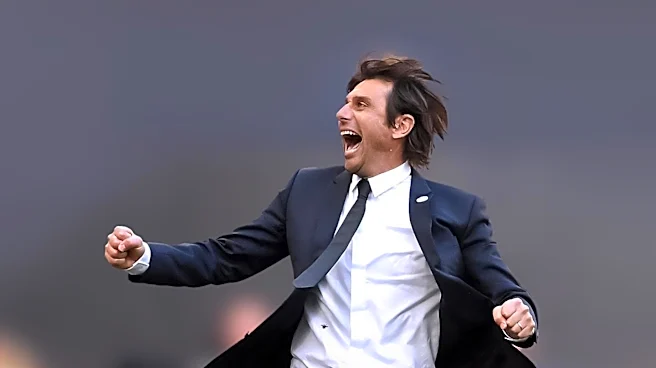
In 2017, Chelsea's then-manager Antonio Conte informed striker Diego Costa via text message that he was not part of the club's future plans. This communication led Costa to skip pre-season training and eventually facilitated his return to Atletico Madrid.
Costa, who had been a key player for Chelsea, scoring 22 goals in all competitions during the 2016/17 season, was pivotal in the team's success under Conte. However, the relationship between the player and the manager soured, culminating in Costa's exclusion from the squad. Despite his contributions, Costa was told he was not needed for the upcoming season, prompting him to seek a transfer. Although he initially failed to secure a move before the summer deadline, Costa rejoined Atletico Madrid in September 2017, after the Spanish club's transfer ban was lifted.
Why It's Important?
The incident highlights the sometimes harsh realities of professional sports, where even successful players can find themselves out of favor due to managerial decisions. Costa's situation underscores the importance of communication and relationships between players and management. For Chelsea, losing a player of Costa's caliber could have impacted their performance, as he was instrumental in their Premier League success. For Costa, the move back to Atletico Madrid marked a return to familiar grounds, allowing him to continue his career at a high level. This situation also reflects broader themes in sports management, where strategic decisions can lead to significant changes in team dynamics and player careers.
What's Next?
Following his departure from Chelsea, Costa spent several years at Atletico Madrid, contributing to the team's efforts in domestic and international competitions. His career later included stints in Brazil and a brief return to the Premier League with Wolverhampton Wanderers before retiring. For Chelsea, the managerial decision to part ways with Costa was part of a broader strategy under Conte, who continued to make changes to the squad. However, Conte's tenure at Chelsea was short-lived, as he was sacked after failing to secure a Champions League spot in his second season.
Beyond the Headlines
The fallout between Costa and Conte also sheds light on the personal dynamics within football clubs. Costa's comments about Conte's management style suggest that interpersonal relationships can significantly affect team morale and individual player satisfaction. This case illustrates how managerial approaches can influence not only team performance but also the career trajectories of players. The situation also raises questions about the role of communication in sports management and how it can be improved to prevent similar conflicts in the future.