






What's Happening?
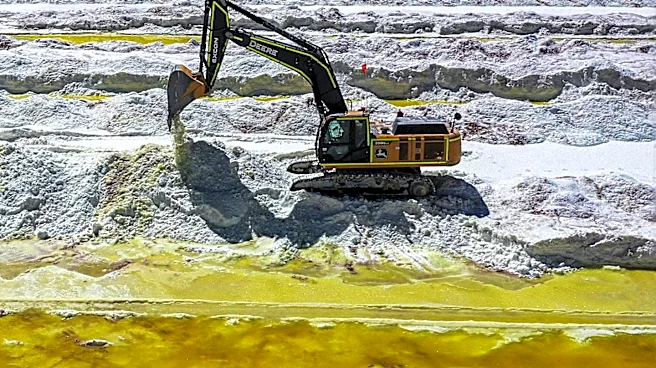
Anson Resources, an Australian mineral resources company, has received significant backing from Utah's congressional delegation for its grant applications to the U.S. Department of Energy (DOE). The company is seeking funding to advance its Green River
Lithium Project in Utah. The support comes from Congressman Mike Kennedy, Congressman Blake Moore, and Congressman Burgess Owens, who have formally requested the DOE to give 'full and fair consideration' to Anson's applications. The grants, if approved, would provide Anson with $32 million for the Mines of the Future fund, $10 million for the Mines and Metals Capacity Expansion fund, and $100 million for the Battery Materials Processing and Battery Manufacturing fund. Anson's subsidiary, A1 Lithium, which is part of the U.S. Defense Industrial Base Consortium, submitted the applications as part of a strategy to secure non-dilutive funding for the project.
Why It's Important?
The support from Utah's lawmakers highlights the strategic importance of the Green River Lithium Project in the context of U.S. energy independence and technological advancement. Lithium is a critical component in battery technology, which is essential for electric vehicles and renewable energy storage solutions. By securing these grants, Anson Resources could significantly contribute to the domestic supply chain of battery materials, reducing reliance on foreign sources. This aligns with broader U.S. policy goals to bolster domestic production of critical minerals and enhance national security. The project could also stimulate economic growth in Utah, creating jobs and fostering technological innovation in the region.
What's Next?
If Anson Resources secures the DOE grants, the company will proceed with the development of the Green River Lithium Project, aiming for a Final Investment Decision by the second half of 2027. The successful acquisition of funding would enable Anson to advance its project timeline and potentially attract further investment. The outcome of the grant applications will likely influence the company's strategic decisions and its ability to establish a significant presence in the U.S. lithium market. Stakeholders, including local communities and industry partners, will be closely monitoring the DOE's decision, which could set a precedent for future funding of similar projects.