






What's Happening?
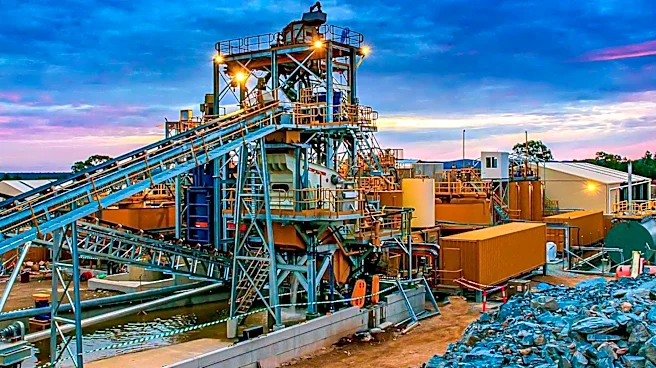
Canada is actively pursuing direct equity positions in mining and processing projects, particularly those involving rare earth elements and graphite. This strategy is a response to the near-total dependence of North America and its allies on China for
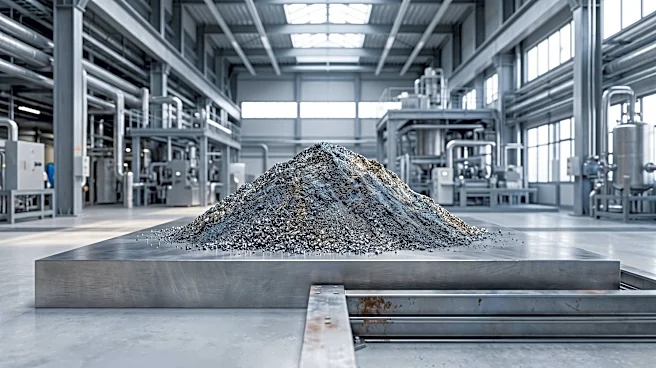
the supply and processing of critical minerals. China currently controls approximately 63% of global rare earth mining production, 85-90% of rare earth oxide refining, and over 92% of metal and magnet production. These elements, including heavy rare earths like dysprosium, terbium, gadolinium, and lutetium, are vital for permanent magnets used in electric motors, jet engines, missile systems, and advanced sensors. Canada's federal government, through initiatives like the Canada Growth Fund, is following Quebec's lead in de-risking capital-intensive projects and attracting private investors to secure these essential resources. For instance, the Canada Growth Fund has taken a 10% equity stake in Foran Mining in Saskatchewan and provided hybrid financing for Nouveau Monde's graphite development in Quebec.
Why It's Important?
This move by Canada signifies a geopolitical pivot, transforming the acquisition of critical minerals from an economic issue into a matter of national security for the U.S. and its allies. The U.S. faces a critical vulnerability due to its reliance on China for heavy rare earth elements, which are indispensable for defense, energy, and technology sectors. By taking equity stakes, Canada aims to accelerate mineral development, fast-track mines deemed of national interest, and launch a C$2 billion critical minerals sovereign fund. This strategy helps to de-risk projects that might otherwise struggle to compete with China's market dominance, which can flood supply and drive down prices. The U.S. government is also signaling a full embrace of public equity as an industrial policy tool, recognizing that without state involvement, the dependence on Chinese supply will likely increase, impacting various U.S. industries reliant on these materials.
What's Next?
Canada plans to continue mapping supply deficits to further reduce dependence on China and is beginning stockpiling programs for scandium, graphite, and other critical minerals. The goal is to ensure that new production can move forward, with governments becoming shareholders in the mining sector for economic, energy, and national security reasons. The U.S. and its allies are expected to explore additional ways to de-risk projects, including infrastructure funds, loan guarantees, investment tax incentives, price floors, equity positions, and off-take agreements. These measures are crucial to get projects built before a projected crunch hits, as forecasts indicate a significant increase in demand for minerals like copper by 2035. The long-term objective is to establish a more resilient and diversified supply chain for critical minerals, lessening the geopolitical leverage currently held by China.
Beyond the Headlines
The shift in government involvement from mere regulation to direct equity ownership in the mining sector represents a fundamental change in industrial policy. This approach highlights the growing recognition that market forces alone may not be sufficient to address national security and economic imperatives related to critical mineral supply. The ethical implications include potential debates over state intervention in free markets and the balance between national security interests and economic efficiency. Legally, these equity stakes could lead to new frameworks for international cooperation and trade agreements focused on critical minerals. Culturally, it underscores a broader trend of nations re-evaluating global supply chains and prioritizing domestic or allied production to safeguard strategic industries and technological advancement, moving away from a purely globalized model towards more regionalized and secure supply networks.