




What's Happening?
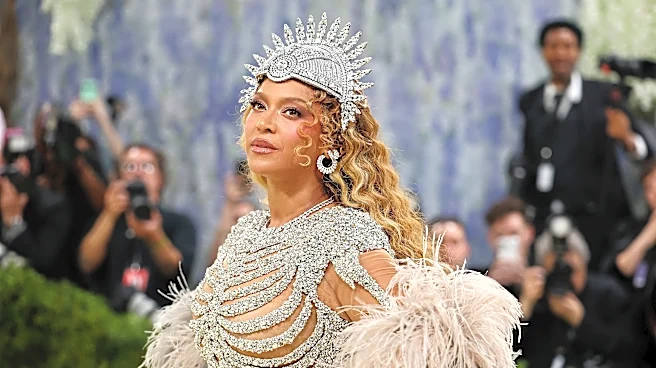
Rumi Carter, daughter of global superstar Beyoncé, has a preference for shopping at discount department stores like Ross and TJ Maxx, a stark contrast to her mother's high-fashion image. This revelation came from Beyoncé herself during an interview with
i-D magazine, where she discussed her Cécrd hair care line and offered rare insights into her children's personal styles. Beyoncé expressed excitement about passing down her extensive fashion archives to her daughters, Blue Ivy and Rumi, as they develop their own fashion senses. However, for now, Rumi is actively choosing more affordable retail options. Family members, including Rumi's grandmother Tina Knowles, have also commented on Rumi's distinct personality, describing her as an 'amazing artist, painter, and creator' with a strong sense of style, differing from her twin brother Sir's more reserved nature and interest in numbers.
Why It's Important?
This insight into Rumi Carter's shopping habits offers a unique perspective on celebrity upbringing and consumer culture. It challenges the common perception that children of affluent public figures exclusively engage with luxury brands, highlighting a potential preference for accessibility and personal choice over high-end labels. For retailers like Ross and TJ Maxx, this casual endorsement from a child of such prominent figures could subtly reinforce their appeal to a broader demographic, including those who might be influenced by celebrity family choices. The story also underscores the individuality developing within celebrity families, suggesting that personal style and preferences can emerge independently of immense wealth and access to exclusive fashion. It provides a relatable element for many consumers who frequent such stores, potentially fostering a sense of connection with the Carter family.
What's Next?
While Rumi's current shopping preferences are noted, it is likely that as she grows, her style may evolve, potentially incorporating elements from her mother's extensive fashion archives, as Beyoncé herself anticipates. Her increasing public appearances, such as joining her mother on stage during the 'Cowboy Carter Tour,' suggest a growing comfort with the spotlight, which could further influence her fashion choices and visibility. Future interviews with family members or Beyoncé herself might offer more details on how Rumi's artistic and fashion interests develop. This early indication of her independent style could also lead to discussions about how children of celebrities navigate personal identity amidst public scrutiny and immense privilege, potentially inspiring other young individuals to embrace their own unique fashion paths regardless of external pressures.
Beyond the Headlines
Beyond the immediate news, Rumi's preference for budget retailers subtly challenges the pervasive influence of luxury branding in celebrity culture. It suggests that even within the most privileged environments, there can be a genuine appreciation for mainstream, accessible fashion. This could spark broader conversations about consumerism, authenticity, and the impact of personal choice versus societal expectations, especially for young individuals growing up in the public eye. Ethically, it highlights the potential for children of celebrities to forge their own identities, rather than being solely defined by their parents' status or wealth. Culturally, it might contribute to a more nuanced understanding of 'style' as something not exclusively tied to price tags, but rather to individual expression and comfort, potentially influencing how younger generations perceive and engage with fashion.