







What's Happening?
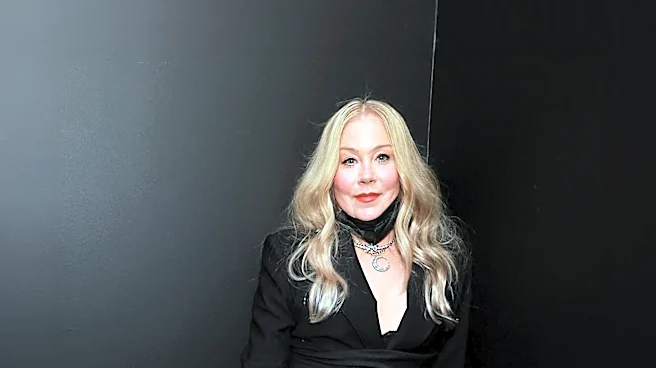
Actress Christina Applegate is undergoing new medical tests to identify the cause of her debilitating symptoms, following a recent misdiagnosis of multiple sclerosis (MS). Applegate, who had publicly announced her MS diagnosis in 2021 and retired from
acting in 2023 due to her health issues, revealed on her 'MeSsy' podcast that doctors confirmed she does not have MS. Despite this, her symptoms, which include difficulty walking, severe pain, shaking hands, and vision problems, have not improved. She expressed frustration at being 'back to square one' and is now being tested for other conditions that mimic MS, such as rheumatoid arthritis (RA), lupus, and Lyme disease. Applegate noted that she felt a sense of loss after the misdiagnosis, having identified with the MS community for years.
Why It's Important?
Christina Applegate's experience highlights a significant issue within the healthcare system: the challenge of accurately diagnosing complex neurological and autoimmune conditions. Her public journey brings attention to the emotional and physical toll of misdiagnosis, particularly for conditions with overlapping symptoms. The fact that she was misdiagnosed for years, and that a doctor on her podcast, Dr. Marwa Kaisey, stated that nearly one in five people told they have MS are actually misdiagnosed, underscores the need for improved diagnostic protocols and greater awareness among medical professionals. For patients, this story emphasizes the importance of seeking multiple opinions and advocating for thorough testing, especially when symptoms persist despite a diagnosis. It also sheds light on the psychological impact of living with an incorrect diagnosis and the subsequent struggle to find a new identity and support system.
What's Next?
Applegate will continue with a series of tests to systematically rule out or confirm other conditions that present similarly to MS, including rheumatoid arthritis, lupus, and Lyme disease. This process is expected to be slow and methodical, as she and her medical team work to pinpoint the correct diagnosis. Her ongoing public discussions on her podcast will likely continue to raise awareness about diagnostic challenges and the patient experience. The outcome of these tests will determine her future treatment path and potentially offer clarity on her long-standing health issues. Her journey may also encourage further research into diagnostic tools for complex autoimmune and neurological disorders.
Beyond the Headlines
Christina Applegate's candid sharing of her misdiagnosis and ongoing health struggles delves into deeper societal implications regarding chronic illness and public perception. Having become a 'poster child' for MS, her revelation of not having the disease creates a unique challenge: the loss of a defined identity within a patient community. This situation highlights how individuals often find solace and understanding in shared diagnoses, and the removal of that label, even if medically correct, can be disorienting. It also brings to light the pressure on public figures to maintain a certain narrative, and the vulnerability involved in sharing deeply personal health battles. Furthermore, the high rate of MS misdiagnosis, as mentioned by Dr. Kaisey, points to systemic issues in medical education and diagnostic practices, suggesting a need for more interdisciplinary approaches to complex symptomology and a greater emphasis on patient-reported experiences in the diagnostic process.