



What's Happening?
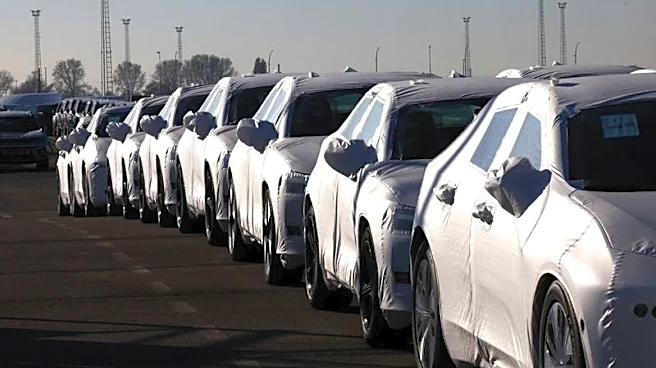
Since 2024, the European Union has implemented additional duties of up to 35 percent on electric vehicles (EVs) assembled in China, on top of the standard 10 percent car import duty. The intention behind these tariffs was to make cheaper Chinese-made
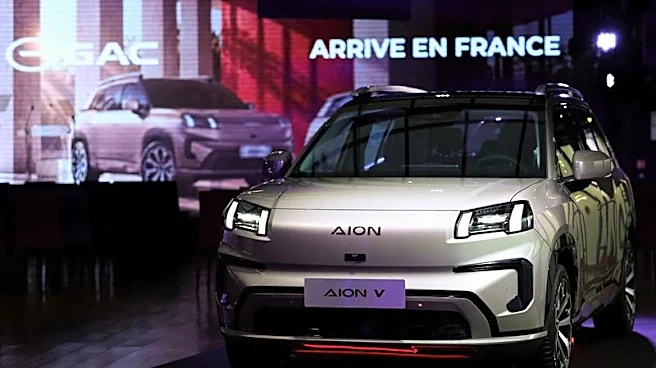
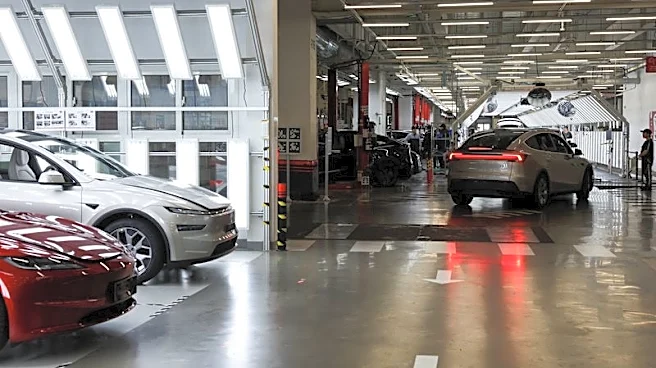
cars more expensive, thereby allowing European factories and workers to compete more effectively. While initial data from Transport & Environment indicated a drop in the share of China-assembled EVs in the EU battery-EV market from 22 percent in 2024 to 17 percent by Q1 2026, this decline primarily stemmed from Western brands relocating their production out of China. European manufacturers' share of Chinese-built BEV imports into the EU decreased from 38 percent to 23 percent, and Tesla's fell from 26 percent to 19 percent. Conversely, Chinese carmakers now account for over half of all Chinese-built BEV imports into the EU, a near reversal of the intended effect. The policy, based on the 'made in China' label, has largely resulted in a rearrangement of production rather than a significant curb on Chinese manufacturers' overall advance.
Why It's Important?
This development highlights a critical challenge in international trade policy, particularly concerning the effectiveness of tariffs based on the country of origin. The EU's strategy aimed to protect its domestic EV industry and foster local production, but the outcome suggests that companies can adapt by shifting assembly locations or focusing on different product categories, such as plug-in hybrids, which carry different duty treatments. The continued price gap, with China-built cars remaining approximately 21 percent cheaper even with tariffs, indicates that the duties have narrowed but not closed the competitive advantage. This situation could lead to increased costs for European consumers without providing the intended level of protection for EU battery makers, as batteries, the largest single cost component of an EV, entered from China with virtually no tariffs. The policy's focus on final assembly rather than key components like batteries may undermine its long-term effectiveness in strengthening the European EV supply chain.
What's Next?
The EU Commission recently approved a request by Volkswagen's Cupra brand to exempt its China-built Tavascan from duties, contingent on a minimum price and annual volume quota. This suggests a potential shift towards managing competition through agreed market shares rather than outright blocking imports. Chinese automakers are exploring similar deals, indicating a move towards a more nuanced trade relationship. Future developments will likely involve discussions on extending duties to batteries, which could significantly impact the economics of European EV production. Additionally, the establishment of ten Chinese production facilities in Europe could further alter the competitive landscape, allowing Chinese companies to sell within EU rules while maintaining their cost advantage. The ongoing consultations between the EU and China, with ministerial-level exchanges and trade talks planned, will be crucial in shaping the future of EV trade relations.
Beyond the Headlines
The EU's experience with EV tariffs on China-assembled cars reveals a deeper complexity in globalized manufacturing and trade. The 'made in China' label, while seemingly straightforward, does not fully capture the intricate supply chains and ownership structures of modern industries. The policy's failure to significantly restrain Chinese carmakers' advance underscores the need for trade policies that consider the entire value chain, from raw materials and components to final assembly. This situation also raises questions about the ethical implications of trade policies that may inadvertently penalize Western brands manufacturing in China, while allowing Chinese brands to adapt and even increase their market share through strategic adjustments. The long-term shift could be towards a more integrated global EV market where tariffs are less effective than direct investment and localized production, potentially leading to a re-evaluation of traditional protectionist measures in favor of more collaborative or managed trade agreements.