



What's Happening?
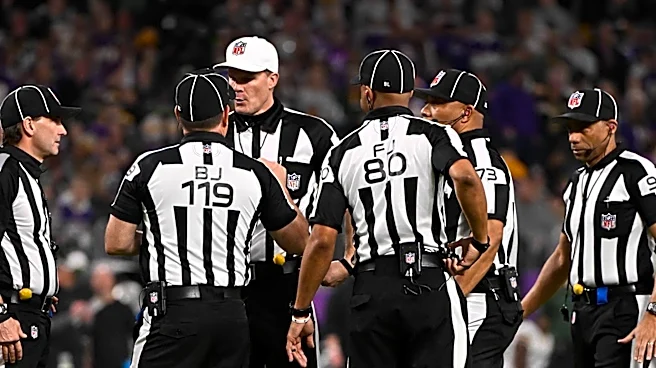
The National Football League (NFL) has acknowledged an officiating error during a Week 5 game between the Dallas Cowboys and the Tampa Bay Buccaneers. A penalty for illegal hands to the face, initially called on Buccaneers defensive lineman Calijah Kancey,
was actually committed by Cowboys guard Tyler Booker. NFL officiating and rules analyst Walt Anderson confirmed that Booker placed his hands in Kancey's face, but the foul was miscommunicated and wrongly assessed against Kancey and the Buccaneers. The league's officiating department stated that the penalty yardage was incorrectly applied to the defensive team. This admission comes more than two weeks after the game, which the Buccaneers won 24-16.
Why It's Important?
This admission highlights the significant impact of officiating errors on game outcomes and team performance in the NFL. Incorrect penalty calls can shift momentum, alter field position, and potentially influence the final score, even if the affected team ultimately wins. For the Buccaneers, who were already among the league leaders in yards wiped out by penalties, this error underscores a broader issue of inconsistent officiating that can disproportionately affect certain teams. Such mistakes can lead to frustration among players and fans, and raise questions about the fairness and accuracy of in-game decisions. The incident also brings into focus the mechanisms for correcting blatant errors during a game, as the New York officiating office reportedly could have intervened but did not.
What's Next?
While the game's result will not be changed, the NFL's admission may prompt further discussion within the league regarding officiating protocols and the review process for in-game errors. The Competition Committee's instructions for officials to verify player numbers in cases of doubt suggest an existing framework for addressing such misidentifications, but its failure to be applied in this instance indicates a need for stricter adherence or improved communication. Fans and analysts may continue to scrutinize officiating decisions more closely, particularly in high-stakes games. The incident could also fuel calls for expanded reviewable plays or more immediate intervention from the league's officiating office to correct clear and obvious mistakes.
Beyond the Headlines
This incident touches upon the broader integrity of professional sports and the role of human error in a highly competitive and financially driven environment. The 'embarrassing officiating mistake,' as described by some, raises ethical questions about accountability and transparency within the NFL. While the league admitted the error, the delay in doing so and the lack of in-game correction can erode public trust in the fairness of the sport. It also highlights the psychological impact on players like Calijah Kancey, who was wrongly penalized and expressed his frustration in the moment. The ongoing debate about officiating accuracy and the potential for technology to assist in real-time corrections will likely continue, as stakeholders seek to minimize such impactful human errors.