







What's Happening?
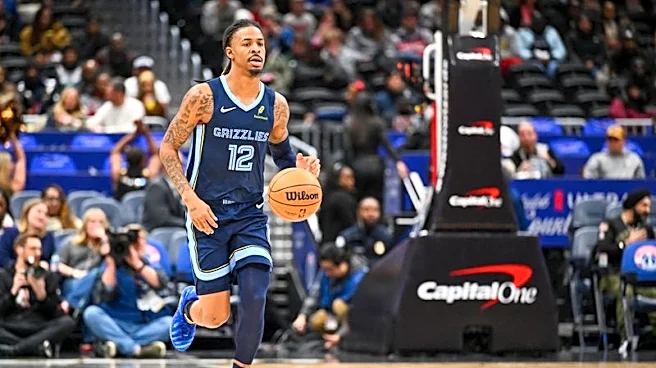
The Portland Trail Blazers have made a significant move by acquiring Ja Morant in a trade, aiming to bolster their backcourt. Morant, a former All-NBA player, joins the Blazers at a time when his career has been marked by both impressive performances
and challenges, including injuries and off-court issues. Despite a down season in 2025-26, Morant remains a potent scoring threat, known for his ability to create plays and score in clutch situations. The trade is seen as a strategic gamble by the Blazers, reminiscent of past management decisions that focused on acquiring high-potential players despite potential risks.
Why It's Important?
This acquisition is crucial for the Blazers as they seek to enhance their competitiveness in the Western Conference. Morant's addition could provide the team with a dynamic offensive boost, potentially transforming their gameplay. However, the move also raises questions about team chemistry and defensive capabilities, given Morant's recent performance struggles and the Blazers' existing roster dynamics. The success of this trade could influence the Blazers' future strategies and their ability to attract other high-profile players, impacting their long-term aspirations in the league.
What's Next?
The Blazers will need to integrate Morant into their lineup effectively, possibly adjusting their strategies to maximize his strengths while addressing any weaknesses. This may involve finding the right balance in their backcourt and ensuring that Morant's presence complements existing players like Damian Lillard. The team's management will likely monitor Morant's adaptation closely, considering potential adjustments to maintain competitiveness. The outcome of this trade could also affect the Blazers' decisions in future player acquisitions and their overall approach to team building.
Beyond the Headlines
The trade highlights broader themes in the NBA, such as the willingness of teams to take risks on talented players with complex backgrounds. It underscores the ongoing challenge of balancing talent acquisition with team culture and stability. Additionally, Morant's move to Portland could serve as a case study in player rehabilitation and the impact of new environments on athlete performance. The Blazers' decision may also reflect a shift in their strategic priorities, focusing on high-reward opportunities despite inherent risks.