




What's Happening?
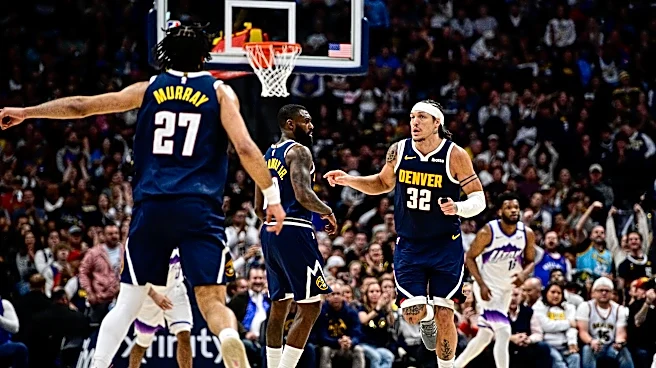
The Denver Nuggets are in the midst of crucial negotiations regarding Peyton Watson, a restricted free agent. The team intends to match any offers he receives but remains open to a sign-and-trade. Watson's market value has increased due to his performance
last season, where he averaged 14.6 points, 4.9 rebounds, 2.1 assists, and 1.1 blocks per game. His ability to defend multiple positions and shoot effectively from three-point range makes him a valuable asset. However, the Nuggets must consider their salary cap constraints and the potential impact of a new contract on their financial flexibility. The team's decision will hinge on balancing Watson's value against their long-term roster strategy.
Why It's Important?
Watson's situation underscores the strategic challenges NBA teams face in managing talent and salary caps. For the Nuggets, retaining Watson could enhance their defensive and offensive depth, crucial for competing in the Western Conference. However, a sign-and-trade could offer financial relief or additional assets, aiding in roster flexibility. Watson's future contract will also influence his career development, as he seeks to capitalize on his improved performance. The outcome of these negotiations could influence how other teams approach similar situations, highlighting the delicate balance between player value and financial constraints.
What's Next?
As the NBA's moratorium concludes, the Nuggets will need to decide whether to match any offer sheets Watson signs or pursue a sign-and-trade. This decision will depend on the offers Watson receives and the team's assessment of his fit within their long-term plans. If a sign-and-trade is pursued, it will require negotiations with interested teams, potentially reshaping the Nuggets' roster. The situation remains dynamic, with potential for rapid developments as teams finalize their rosters for the upcoming season.