






What's Happening?
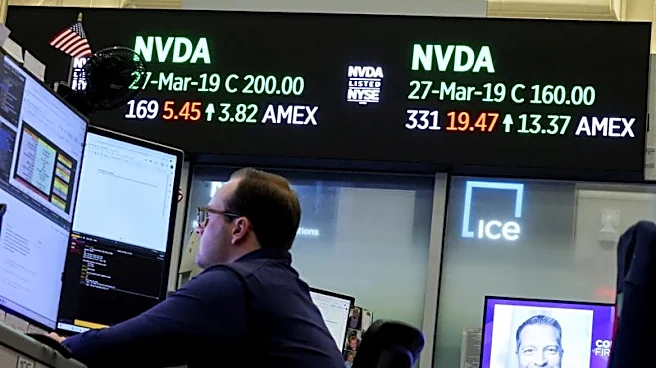
Concerns are mounting over the increasing debt associated with the artificial intelligence (AI) build-out, as Big Tech companies face a spending squeeze despite a rebound in Nvidia's stock. Lenders are becoming more selective regarding corporate bonds,
making it tougher for Big Tech to secure funding from debt markets crucial for AI infrastructure. According to Dan Taylor, deputy chief investment officer at Man Group, investors are now asking harder questions about the cost of AI development and demanding evidence of value creation for shareholders. While Nvidia's stock saw a significant rally following Jensen Huang's reinstatement as CEO, the broader market is not experiencing a similar lift from AI-related activities. Anthropic, which recently had a landmark IPO, is an exception, as it is already generating cash and is near free cash flow breakeven. In contrast, heavy spenders like Oracle, Google owner Alphabet, and certain chipmakers have seen significant declines in their stock prices.
Why It's Important?
The growing scrutiny of AI-related debt and spending has significant implications for the U.S. technology and financial sectors. Big Tech companies, traditionally cash generators, are now projected to spend more on capital projects than they generate in cash in both 2026 and 2027, according to Man Group analysis. This trend could lead to less cash available for share buybacks during market downturns, impacting investor confidence. The increased volume of AI-related borrowing, expected to reach $250 billion through bond sales this year for the biggest AI companies and up to $570 billion across the wider AI industry, is also raising concerns about the risk-reward profile for debt investors. Matthew Rees, head of global bond strategies at L&G Asset Management, notes that bond markets are more bearish on Big Tech hyperscalers than equity markets, partly due to concerns over fundamental credit quality and supply.
What's Next?
The market is likely to fragment, moving beyond the simple 'buy chipmakers, sell software' trade of the past two years, as investors become more selective about where capital is allocated in the AI space. Companies will face increased pressure to demonstrate clear returns on their AI investments and to manage their debt levels effectively. The performance of AI companies that are already generating cash, like Anthropic, may serve as a benchmark for future investments. The ongoing debate about the true cost and value of AI infrastructure will continue to shape lending practices and investment strategies. Big Tech companies may need to re-evaluate their spending priorities and explore more capital-efficient ways to pursue AI development to maintain investor confidence and access to funding.
Beyond the Headlines
The current AI debt concerns highlight a critical juncture in the evolution of the artificial intelligence industry. The initial gold rush mentality, characterized by massive investments in AI infrastructure, is giving way to a more pragmatic assessment of financial sustainability. This shift could lead to a more mature and responsible approach to AI development, where companies are incentivized to focus on practical applications and demonstrable value rather than speculative growth. It also raises questions about the long-term economic impact of such large-scale capital expenditures and whether the promised returns of AI will materialize quickly enough to justify the current levels of investment. The interplay between technological ambition and financial prudence will be a defining challenge for the AI sector in the coming years, potentially leading to a re-evaluation of business models and investment strategies across the entire tech ecosystem.