






What's Happening?
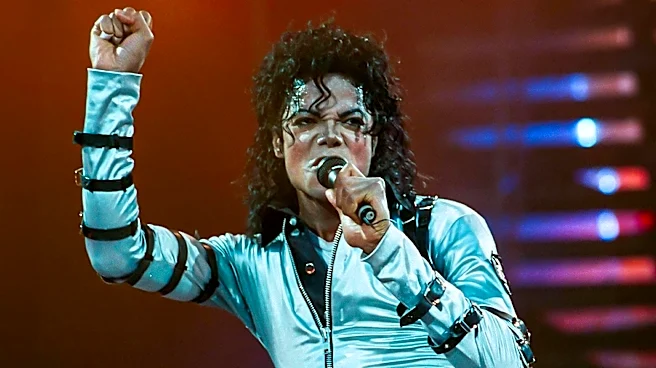
Seven previously unheard tracks featuring Michael Jackson and his brothers, recorded at Crystal Sound Recording Studios in Los Angeles in 1976, have resurfaced. These recordings, shared with Rolling Stone by veteran producers Susan Michelson and Alex
Cyrell, capture Michael Jackson at 17, transitioning between his Motown sound and his later iconic vocal style. The tracks include a soulful cover of 'People Got to Be Free,' 'Sweet Music,' 'Blues Away,' 'Disco Kids,' a bluesy version of Boz Scaggs' 'We’re All Alone,' 'Goodness Knows,' and 'Gimme What I Need.' These sessions occurred during a pivotal moment when the Jackson 5 had left Motown and signed with Epic Records as 'The Jacksons.' Despite the meticulous history of the Jacksons, these recordings have remained largely unknown, with even some musicians who played on them having vague recollections. Jackie Jackson, a member of the group, confirmed remembering the Crystal Sound sessions and some of the song titles.
Why It's Important?
The discovery of these 'lost' Michael Jackson tapes is significant for music historians and fans, offering a rare glimpse into a crucial developmental period for one of the most influential artists in history. These tracks could reshape the understanding of Michael Jackson's vocal evolution and the Jacksons' musical direction during their transition from Motown to Epic. The existence of these recordings, backed by financial records and producer testimonies, challenges previous narratives that only acknowledged Kenny Gamble and Leon Huff as producers for the Jacksons' first Epic album. The mystery surrounding their non-release raises questions about record label politics, publishing disputes, and the potential for valuable historical music to remain unheard due to corporate decisions or oversight. Their eventual release could provide new material for analysis and appreciation of Michael Jackson's early artistry.
What's Next?
The immediate next step involves Sony Music Entertainment, which owns the recordings, and Michael Jackson's estate. While Sony has not denied the existence of the tracks, they have also not commented on their release. Producers Cyrell and Michelson, who have preserved these mixes for decades, are eager for them to be released. However, any official release would likely require agreement from Sony and the Jackson estate, as well as the surviving members of the Jacksons. Past attempts by Cyrell and songwriter James Whitney to engage Sony executives about these tracks have not resulted in their release. The situation highlights the complexities of intellectual property rights and the challenges of bringing historical recordings to the public, especially when dealing with the estates of iconic artists.