





What's Happening?
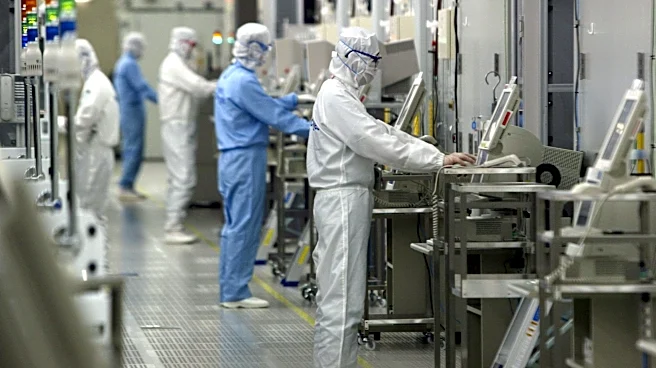
VAT Group, a leading global supplier of high-end vacuum valves and other components for the semiconductor industry, announced its highest quarterly order intake and sales ever in Q3 2026. The company reported a record order intake of CHF 697 million,
marking a 39% sequential increase and a 193% year-on-year rise. Net sales reached CHF 376 million, up 29% sequentially and 46% year-on-year. This surge is attributed to a persistent supply and demand imbalance in advanced logic and memory chips, fueled by exceptionally high data center capital expenditure from hyperscalers and the commencement of high-volume production of Gate All Around (GAA) semiconductors. The demand for leading-edge manufacturing tools has been unprecedented, with semiconductor orders increasing by 37% quarter-over-quarter and 270% compared to the same quarter last year. Sales in the semiconductor segment rose by 39% and 70% respectively, reflecting significant capacity ramp activity. The company noted that order growth is not due to double bookings but rather extended ordering windows, now up to nine months or longer, compared to three months at the end of 2025, partly driven by anticipated price increases and availability concerns. Demand from Chinese customers also remains strong due to ongoing self-sustainability efforts.
Why It's Important?
This record performance by VAT Group underscores the robust and accelerating investment in semiconductor manufacturing capacity, a critical indicator for the broader technology and U.S. economy. The sustained demand for advanced chips, particularly those used in AI and data centers, highlights the foundational role of semiconductors in modern technological infrastructure. The imbalance between supply and demand for these advanced components signifies a bottleneck that could impact the growth of AI, cloud computing, and other high-tech sectors. For U.S. industries, this means continued pressure on supply chains but also significant opportunities for companies involved in semiconductor equipment, materials, and design. The extended ordering windows suggest that manufacturers are anticipating prolonged demand and potential future supply constraints, prompting them to secure equipment well in advance. This trend could lead to increased capital expenditure by U.S. semiconductor firms and a push for domestic manufacturing capabilities, aligning with national strategic goals to reduce reliance on overseas production and enhance technological resilience.
What's Next?
VAT Group anticipates that strong investment conditions in the semiconductor sector will continue into 2027 and beyond. Market observers are upgrading wafer fab equipment (WFE) estimates, with some projecting WFE to exceed USD 200 billion in 2027. The company expects the market to remain in a strong structural growth phase, with approximately 150 new fabs either under construction or planned over the next three years to address the ongoing supply-demand imbalance. VAT Group is preparing for another strong growth year by further ramping up its production capacity, including adding 450 full-time employees in Q3 2026 and aligning its supplier base. The company reiterates its guidance for higher full-year 2026 orders, sales, EBITDA, EBITDA margin, net income, and free cash flow compared to 2025. Early indications suggest 2027 sales will be significantly above the previous guidance of CHF 1.5 – 1.7 billion. This sustained growth trajectory implies continued high demand for semiconductor manufacturing tools and services, impacting global supply chains and potentially driving further investments in advanced chip production facilities worldwide, including in the U.S.
Beyond the Headlines
The sustained boom in semiconductor demand, particularly for AI-driven applications, points to a deeper transformation in the global technological landscape. The emphasis on Gate All Around (GAA) semiconductors signifies a new era of chip architecture, pushing the boundaries of performance and efficiency. This technological leap requires immense capital investment and highly specialized equipment, creating a significant barrier to entry for new players and consolidating power among a few key manufacturers and suppliers like VAT Group. The geopolitical implications are also profound, as nations, including the U.S., increasingly view semiconductor self-sufficiency as a matter of national security and economic competitiveness. The strong demand from Chinese customers, driven by self-sustainability efforts, highlights the ongoing technological rivalry and the fragmentation of global supply chains. This dynamic could lead to increased government incentives and subsidies for domestic semiconductor production in various countries, potentially reshaping the global semiconductor ecosystem and fostering regional specialization.