






What's Happening?
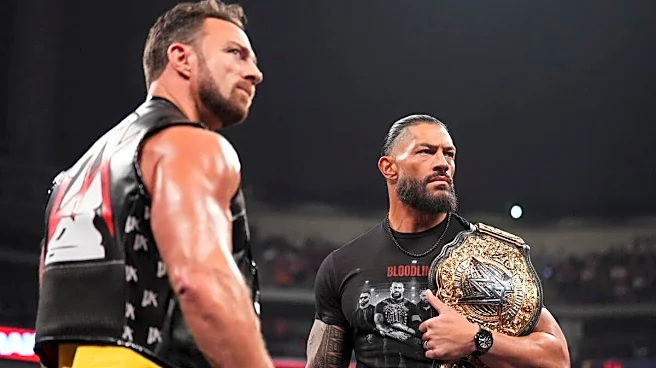
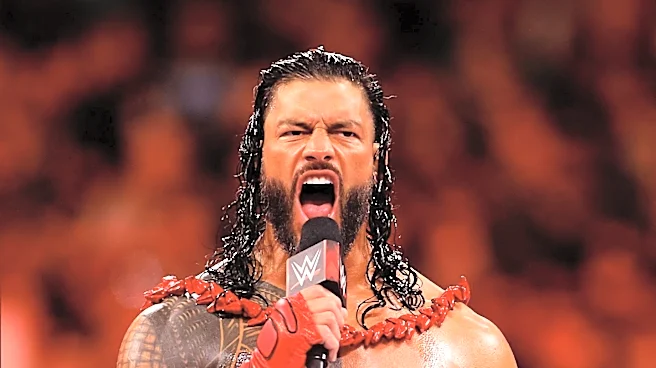
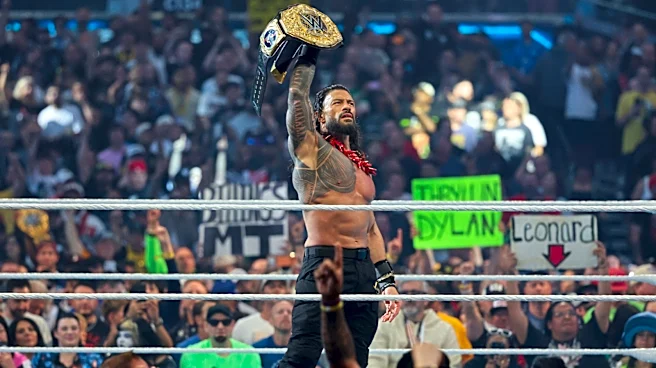
WWE Hall of Famer Eric Bischoff has publicly stated his boredom with Roman Reigns' character, asserting that he doesn't see the character evolving. Speaking on the '83 Weeks' podcast, Bischoff, while acknowledging his respect for Reigns' success, compared
his current act to Hulk Hogan's later run in WCW, where fans grew tired of a stagnant character. Bischoff emphasized that character evolution is crucial for compelling storytelling in professional wrestling, especially for someone who has been in a role for an extended period. He described Reigns' current portrayal as 'maintenance' that is financially successful but lacks engaging development, leading to his personal disinterest.
Why It's Important?
Eric Bischoff's comments are significant for the U.S. professional wrestling industry, particularly for WWE, as they come from a respected figure with extensive experience in wrestling promotion and character development. His critique highlights a common challenge in long-term storytelling within sports entertainment: maintaining character freshness and audience engagement. If a prominent figure like Bischoff, and by extension, a segment of the fanbase, perceives a lack of evolution in a top star like Roman Reigns, it could signal potential long-term issues for audience retention and creative direction. This feedback can influence how WWE approaches character arcs for its main event talent, potentially leading to adjustments in storytelling to keep the product compelling and prevent fan fatigue.
What's Next?
While Eric Bischoff's comments are an external critique, they contribute to the ongoing discourse among fans and industry insiders about Roman Reigns' character. WWE's creative team will likely continue to monitor audience reactions and ratings, which are the ultimate indicators of a character's success. If fan sentiment aligns with Bischoff's observations over time, WWE might consider new directions or significant shifts for Reigns' character to re-engage the audience. However, given Reigns' current financial success and popularity, immediate drastic changes are not guaranteed. The discussion also opens the door for other wrestling personalities to weigh in, further shaping public perception and potentially influencing future creative decisions within the company.
Beyond the Headlines
Bischoff's remarks touch upon a fundamental aspect of serialized entertainment, whether in wrestling, television, or film: the necessity of character growth to sustain audience interest. In professional wrestling, where characters are often central to the narrative, stagnation can lead to disengagement, even for highly successful acts. This situation also highlights the tension between creative innovation and commercial success; a character might be financially viable through 'maintenance,' but at the cost of artistic or narrative depth. The comparison to Hulk Hogan's WCW run serves as a historical lesson, reminding the industry that even the biggest stars need to adapt to remain relevant and compelling to their audience over time. This ongoing debate underscores the complex art of balancing tradition with evolution in sports entertainment.