




What's Happening?
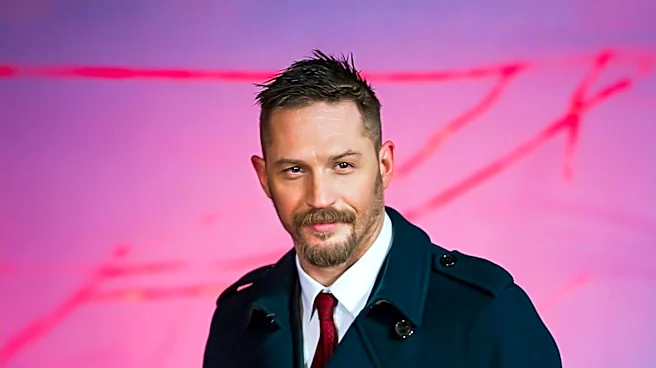
Tom Hardy's career and personal life can be traced through his diverse hairstyles, which have ranged from the 'floppy, past-the-ears noughties look' to the 'bald Bane era' and his 'Peaky Blinders slick-back.' According to Esquire, Hardy has consistently
adapted his hair, often for roles, but also reflecting evolving personal style. Barbers Guray Kesman, Robyn Mulgrew, Maxwell Oakley, Brent Pankhurst, Chris Merrick, and Jay Hecker have detailed how to achieve these various looks, including the soft sweep back, soft buzz, textured crop, textured slick back, messy crop, and curtains. Each style is described with specific cutting and styling advice, along with the face shapes they best complement. For instance, the soft sweep back is a textured scissor cut with a low, natural finish, while the soft buzz is a close-cropped look, typically a grade three on top and a grade two on the sides.
Why It's Important?
The detailed analysis of Tom Hardy's hairstyles highlights a broader cultural trend in men's grooming and fashion, where celebrity influence often dictates popular styles. This phenomenon impacts the beauty and personal care industry, particularly barbershops and hair product manufacturers, as consumers seek to emulate celebrity looks. The article provides practical guidance, making these styles accessible to a wider audience and potentially driving demand for specific cuts and products. The emphasis on versatility and suitability for different face shapes also underscores a growing awareness and personalization within men's grooming, moving beyond one-size-fits-all approaches. This trend can lead to increased revenue for businesses catering to men's hair care and styling.
Beyond the Headlines
Beyond mere aesthetics, the evolution of a public figure's appearance, such as Tom Hardy's hairstyles, can subtly reflect shifts in societal norms and perceptions of masculinity. His willingness to dramatically change his look for roles, from a shaved head for 'Bane' to more refined styles, challenges traditional notions of a fixed male image. This adaptability can inspire individuals to experiment with their own appearance, fostering a more fluid and expressive approach to personal style. The detailed breakdown by professional barbers also elevates the craft of hairdressing, emphasizing the skill and artistry involved in creating and maintaining these diverse looks, potentially attracting more talent to the profession and enhancing its perceived value.