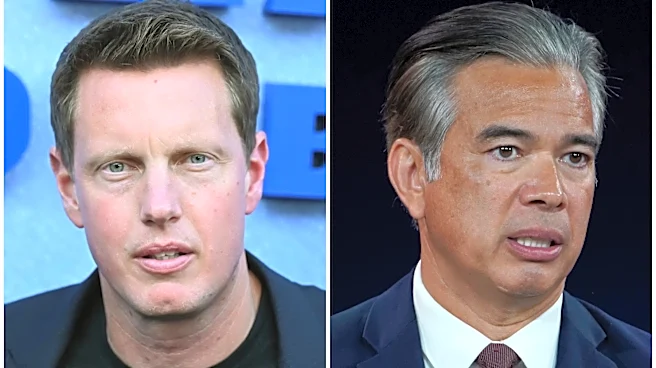







What's Happening?
Television writer and producer Mike Schur has voiced strong concerns that the proposed merger between Paramount and Warner Bros. Discovery (WBD) represents an existential threat to writers and the broader entertainment industry. Schur argues that such
megamergers lead to fewer shows and movies being produced, resulting in job losses for tens of thousands of skilled professionals across various crafts, including actors, directors, production designers, and crew members. He contends that consolidation reduces competition, leading to fewer buyers for creative work, less leverage for negotiating fair terms, and a narrower range of creative projects. Schur's position is not tied to personal connections but to the systemic harm caused by unchecked media consolidation, which he believes has already wounded the industry.
Why It's Important?
Mike Schur's intervention highlights the significant impact of media consolidation on the creative workforce and the overall health of the entertainment ecosystem. His argument that fewer buyers lead to less opportunity and creative diversity is critical for understanding the long-term consequences for both industry professionals and consumers. The merger, if approved, would create a dominant entity in original film and television programming, potentially stifling independent productions and limiting the range of content available. This situation underscores the ongoing struggle between corporate financial interests and the preservation of a vibrant, competitive creative industry, echoing concerns raised by the Writers Guild of America and several state attorneys general who are challenging the merger on antitrust grounds.
What's Next?
The proposed Paramount-Warner Bros. Discovery merger is currently facing legal challenges from the Writers Guild of America and 12 state attorneys general, who are seeking to block the deal. Mike Schur's public statement and his participation in the WGA's lawsuit will likely add further weight to these legal and regulatory efforts. The outcome will depend on the courts' interpretation of antitrust laws and the ability of the plaintiffs to demonstrate the merger's detrimental effects on competition and the industry workforce. The debate will continue to unfold in federal court, with significant implications for the future structure and creative output of Hollywood.
Beyond the Headlines
Schur's commentary delves into the deeper implications of media consolidation, particularly the shift from a competitive market where studios bought shows from various sources to a vertically siloed system where companies primarily produce content for their own platforms. This trend not only reduces opportunities for external creators but also limits creative latitude, as executives within consolidated entities may favor specific types of content. The historical example of Disney's acquisition of 21st Century Fox, which led to job losses and reduced film output, serves as a cautionary tale. This situation raises fundamental questions about the balance between corporate growth and the public good, and whether current antitrust laws are sufficient to protect competition and cultural diversity in the digital age.