




What's Happening?
The Detroit Tigers and co-defendants Ilitch Holdings and the Detroit-Wayne County Stadium Authority have formally responded to a lawsuit filed by Oakland Athletics third baseman Zack Gelof. Gelof sustained an injury during a July 2026 game at Comerica
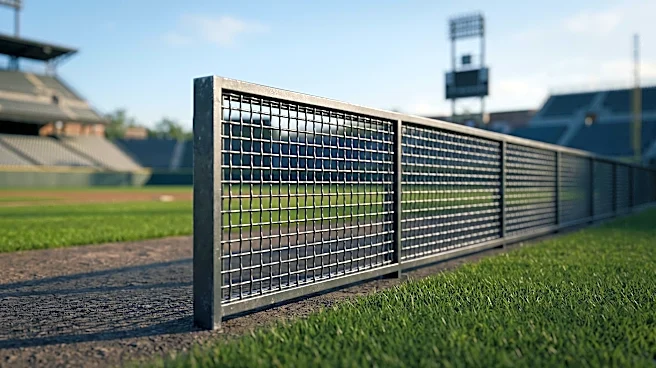
Park when his right knee struck an exposed metal fence while attempting to catch a foul ball. The lawsuit, filed on September 28 in Wayne County Circuit Court, alleges that the rigid, sharp fencing lacked adequate protective padding, resulting in a deep laceration beneath Gelof's kneecap and causing him to miss 30 days of play. The Tigers' motion, filed October 29, argues that Gelof, as a professional baseball player, assumed the inherent risks of the game, including potential collisions with the fence. They also contend that the exposed fencing was "open and obvious," which should preclude his claims. Ilitch Holdings and the Detroit-Wayne County Stadium Authority assert they did not control Comerica Park's conditions and therefore cannot be held liable, with the stadium authority also claiming governmental immunity. Gelof's lawsuit seeks unspecified damages for medical expenses, lost wages, career opportunities, and pain and suffering.
Why It's Important?
This lawsuit highlights critical issues regarding player safety in professional sports venues and the legal responsibilities of team owners and stadium operators. The outcome could set precedents for how professional athletes' injuries are litigated, particularly concerning the 'assumption of risk' doctrine versus the duty of care owed by venue owners. If Gelof's claim is successful, it could prompt stricter safety regulations and increased financial liabilities for sports franchises and stadium authorities across the U.S., potentially leading to significant investments in facility upgrades to prevent similar incidents. Conversely, a ruling in favor of the Tigers could reinforce the idea that professional athletes accept a high degree of risk, potentially making it more challenging for players to seek compensation for injuries sustained during play, even if those injuries are linked to facility conditions. The case also touches on the complexities of liability among multiple entities involved in stadium operations and ownership.
What's Next?
The Detroit Tigers and their co-defendants are requesting the court to dismiss the lawsuit. The court will now consider the arguments presented in the motion to dismiss, including the claims of assumed risk, the 'open and obvious' nature of the hazard, and governmental immunity. If the motion to dismiss is denied, the case will likely proceed to discovery, where both parties will exchange information and evidence. This could involve depositions of players, team officials, stadium personnel, and expert witnesses. The lawsuit does not specify a dollar amount for damages, leaving room for negotiation or a jury's determination should the case go to trial. The fact that the Tigers installed protective padding over the exposed fencing shortly after the incident may be a point of contention in future proceedings, potentially indicating an acknowledgment of a hazard.
Beyond the Headlines
Beyond the immediate legal battle, this case underscores the ongoing tension between the inherent dangers of professional sports and the evolving standards of player safety. While athletes are compensated for their participation in high-risk activities, there's a growing expectation that employers and venue operators provide reasonably safe environments. This lawsuit could influence future collective bargaining agreements between player unions and leagues, potentially leading to more explicit clauses regarding facility safety standards and injury compensation. It also raises ethical questions about the responsibility of sports organizations to protect their most valuable assets—the players—from preventable harm, even when those players are perceived to be accepting risks. The outcome could contribute to a broader discussion about the balance between maintaining the integrity and excitement of the game and ensuring the long-term health and safety of athletes.