






What's Happening?
The Cut Custom Processing LLC in Isabella County, Michigan, has been awarded a $250,000 grant through the USDA’s $57 million Meat and Poultry Processing Expansion Program (MPPEP). This grant is part of a broader initiative that has distributed over $200
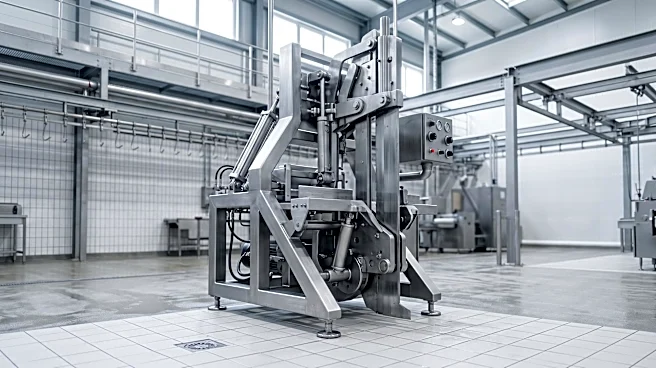
million to 147 independent businesses across 40 states. The MPPEP, managed by USDA Rural Development’s Rural Business-Cooperative Services, aims to boost competition and sustainable growth in the U.S. meat processing sector and enhance supply chain resiliency. The Cut Custom Processing will utilize the funds to acquire new harvest-line equipment, including a hydraulic stunning box, restrainer, hide puller, and carcass splitter. This expansion is expected to increase annual processing capacity, alleviate production bottlenecks, support additional producer-owned livestock harvests, and create new full-time jobs. According to Ag Secretary Brooke Rollins, this program provides producers with more competitive market options closer to home, retaining more value from American-raised beef within rural communities.
Why It's Important?
This USDA grant is critical for strengthening the U.S. meat processing infrastructure, which has faced challenges in recent years. By expanding the capacity of independent processors like The Cut Custom Processing, the program directly addresses bottlenecks in the supply chain, offering more competitive market options for livestock producers. This increased processing capability is vital for the ongoing efforts to rebuild the U.S. cattle herd, as it provides farmers with the confidence that there will be sufficient local processing opportunities for their livestock. The investment also stimulates economic growth in rural communities by creating new jobs and ensuring that the economic benefits of American-raised beef remain local. Furthermore, a more resilient and diversified meat processing sector enhances food security and reduces reliance on a few large processors, fostering a more robust and competitive market environment for both producers and consumers.
What's Next?
The USDA’s MPPEP program will continue to award grants to eligible entities, including for-profit and nonprofit businesses, producer-owned cooperatives, and state or local government entities, all of which must be domestically owned and independently operated. The ongoing investment aims to create thousands of jobs nationwide and further enhance the competitiveness and sustainability of the U.S. meat and poultry processing sector. Secretary Rollins has indicated that the focus remains on rebuilding the American cattle herd, and providing more local processing opportunities is a key component of this goal. The expansion of facilities like The Cut Custom Processing will contribute to a more decentralized and resilient food supply chain, potentially leading to more stable prices for producers and a wider variety of locally sourced products for consumers. The program's long-term success will be measured by its ability to foster sustained growth, competition, and job creation within the meat processing industry.
Beyond the Headlines
The USDA’s investment in local meat processing facilities reflects a strategic effort to decentralize and diversify the U.S. food supply chain. The vulnerabilities exposed during recent crises highlighted the risks associated with an over-reliance on a few large processing plants. By supporting smaller, independent processors, the government is not only addressing immediate capacity issues but also fostering a more resilient and equitable agricultural system. This initiative empowers local communities, strengthens regional food economies, and provides producers with greater control and better returns for their livestock. It also aligns with a growing consumer demand for locally sourced and transparently processed food products. The program's emphasis on reducing red tape and increasing flexibility for applicants suggests a commitment to making government support more accessible and effective for a wider range of businesses, promoting innovation and growth at the grassroots level of the agricultural sector.