
What's Happening?
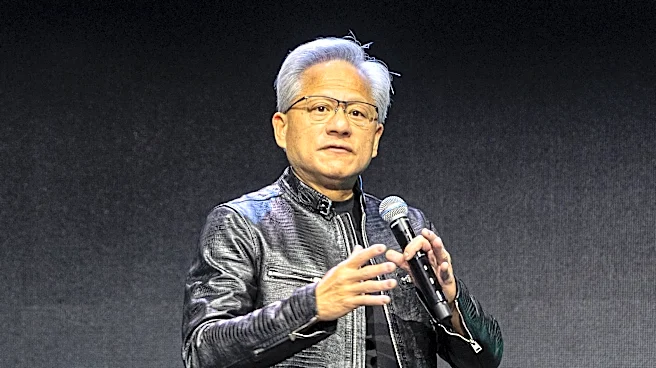
Nvidia's board has reinstated Jensen Huang as CEO following a significant downturn in the company's stock price. The decision comes after Huang's resignation, which led to a nearly 50% drop in Nvidia's stock from
its early October highs, including a 23% decline in the week prior to his reinstatement. This rapid stock depreciation, which saw Nvidia's market cap fluctuate from $3 trillion to $4 trillion after Huang's return, prompted swift action from shareholders, employees, and even the President of the United States, all of whom reportedly viewed Huang as critical to the company's success. The situation highlights the immense influence of key founders in the tech industry, particularly in companies central to the AI buildout. Critics point to the board's initial handling of the situation, noting they could have completed their investigation before forcing Huang's resignation and that they had explicitly stated he would not return as CEO on a recent earnings call, potentially opening the door for lawsuits.
Why It's Important?
The reinstatement of Jensen Huang at Nvidia underscores the powerful influence of the stock market and key leadership figures on corporate decisions and economic stability. Nvidia, a multi-trillion-dollar company, is a central player in the artificial intelligence sector, making its stability and leadership crucial for the broader tech industry and the economy. The rapid market reaction to Huang's initial departure and subsequent return demonstrates the perceived irreplaceable value of certain founders, creating significant 'key person risk' for companies of this scale. This event also illustrates a broader trend where the stock market's demands often dictate corporate actions, as seen in historical instances like the TARP bailout in 2008 and the swift government response to the 2020 market crash. The incident raises questions about corporate governance, board accountability, and the potential for market sentiment to override established corporate processes, impacting investor confidence and regulatory oversight.
What's Next?
The immediate aftermath of Jensen Huang's reinstatement will likely involve efforts to stabilize Nvidia's stock price and reassure investors about the company's leadership and strategic direction. The board will face scrutiny regarding its initial decision-making process and the rapid reversal, potentially leading to shareholder lawsuits as indicated by the source. The incident may also prompt broader discussions within the tech industry about succession planning and mitigating key person risk, especially for companies with highly influential founders. Regulators and corporate governance advocates might examine the circumstances surrounding Huang's departure and return to assess whether appropriate protocols were followed and if any new guidelines are needed to protect shareholder interests in similar situations. The market will closely watch Nvidia's performance and any future announcements regarding its leadership structure and AI initiatives.
Beyond the Headlines
This event reveals deeper implications about the nature of power in modern corporations and the increasing influence of financial markets on corporate governance. The narrative suggests that in the realm of multi-trillion-dollar tech giants, the 'rich and powerful' may operate under a different set of rules, where market demands can swiftly overturn board decisions and established protocols. This dynamic highlights a potential ethical dilemma: whether the pursuit of profit and growth, as dictated by the stock market, can supersede principles of sound corporate governance and accountability. The incident also underscores the 'stock market as its own country' phenomenon, where its amoral pursuit of returns can dictate outcomes that might be viewed as unfair or inconsistent by the public. This could lead to increased public and regulatory pressure for greater transparency and stricter oversight of corporate boards, particularly in cases involving highly influential founders and significant market volatility.