




What's Happening?
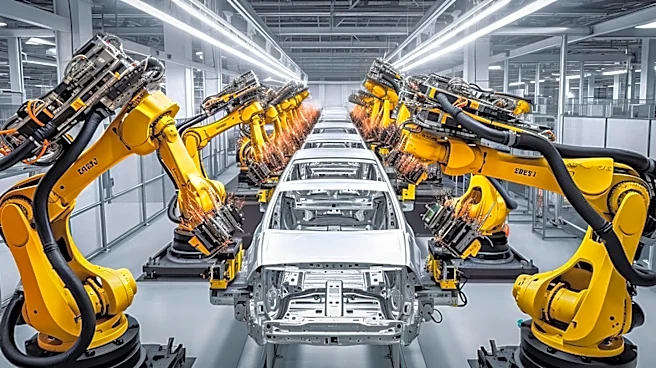
The manufacturing industry is encountering a significant data gap that is impeding the widespread adoption of physical AI and autonomous robots in industrial settings. Despite nearly $48 billion raised by robotics and physical AI companies in 2026, most
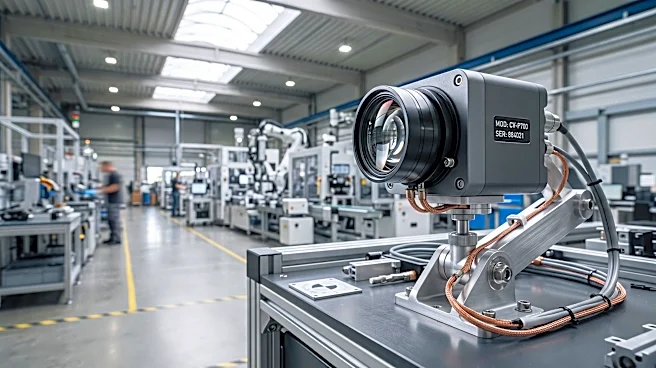
production facilities are not equipped to provide the real-world data necessary for these robots to learn and operate effectively beyond controlled environments. A key issue is the lack of structured data that connects process decisions with measurable quality outcomes. For instance, in welding, the nuanced knowledge of how parameters like angle and speed affect the final product, typically held by experienced technicians, is often not captured in a format usable for training autonomous systems. Relevant contextual information is frequently siloed across different systems, making it difficult to link operational parameters with quality inspection results. The Manufacturing Leadership Council's 2026 survey indicates that 37% of manufacturers cite a lack of data interoperability as a major roadblock, an increase from 22% in 2025.
Why It's Important?
This data gap poses a critical challenge to the U.S. manufacturing sector's ability to fully leverage the transformative potential of physical AI. Without comprehensive and interconnected data, autonomous robots cannot adapt to changing conditions or consistently improve their techniques, limiting the efficiency and quality improvements that manufacturers expect. This could hinder productivity gains, increase operational costs, and slow down the modernization of industrial processes. The inability to effectively train AI systems with real-world production data means that the substantial investments in robotics and AI technologies may not yield their full return. Furthermore, it could put U.S. manufacturers at a disadvantage compared to global competitors who successfully bridge this data divide, impacting national economic competitiveness and innovation in advanced manufacturing.
What's Next?
To overcome this challenge, manufacturers need to prioritize three key actions. First, they must capture data that accurately reflects real production conditions, focusing on the complex interactions between process parameters and quality outcomes. Second, it is crucial to connect data across the entire production process, creating a 'digital thread' that links production conditions with inspection results and finished-part quality. This involves integrating disparate systems that were not originally designed to communicate. Third, manufacturers must build robust feedback loops around quality and repeatability, defining how autonomous systems will be evaluated and when human oversight is required. Addressing these areas in collaboration with robotics partners will help identify infrastructure gaps and focus investments effectively, paving the way for more widespread and successful physical AI deployment in manufacturing.
Beyond the Headlines
The manufacturing data gap highlights a broader issue in the digital transformation of traditional industries: the challenge of translating tacit human knowledge and experience into structured, machine-readable data. This isn't merely a technical problem of data collection but also a cultural one, requiring a shift in how organizations perceive and document operational expertise. The ethical implications also arise as autonomous systems take on more complex tasks; ensuring that these systems are trained on comprehensive and unbiased data is crucial for preventing errors and maintaining product quality and safety. The push for physical AI also underscores the need for a skilled workforce capable of managing and interpreting these advanced systems, suggesting a future where human-AI collaboration in manufacturing becomes increasingly sophisticated and essential.