







What's Happening?
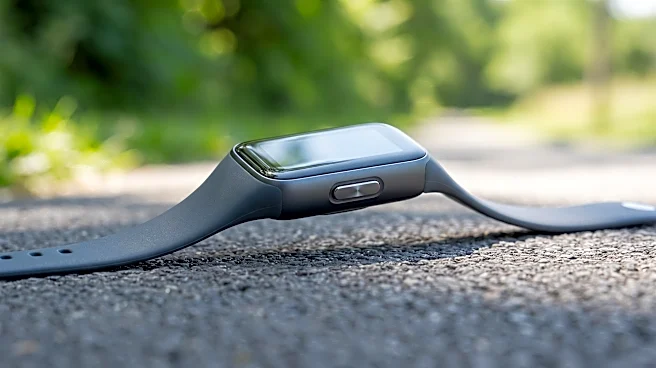
Reviewers have offered varied opinions on the new Fitbit Edge, a fitness tracker priced at $180. Most reviewers acknowledge significant hardware improvements over its predecessor, the Fitbit Charge 6, noting a brighter, more readable screen, the reintroduction
of a physical side button, onboard GPS, and an altimeter. However, a notable drawback highlighted by reviewers is the absence of contactless payment capabilities, a feature present in the Charge 6. Opinions diverge on the target audience for the Fitbit Edge. Some consider it a suitable tracker for a broad range of users, with its GPS performance comparable to more expensive devices. Conversely, other reviewers express reservations, suggesting the Edge is positioned awkwardly between Google's screenless Fitbit Air and the Pixel Watch, with some preferring the Air. A common point of contention is that many of the device's advanced features require a paid Google Health Premium plan, which could be a deterrent for some consumers.
Why It's Important?
The reception of the Fitbit Edge is significant for Google's strategy in the competitive wearables market. The mixed reviews indicate a challenge in clearly positioning the device against both its own product line (Fitbit Air, Pixel Watch) and competitors. The absence of contactless payments, a feature increasingly expected in modern wearables, could impact its appeal to consumers who value convenience. Furthermore, the reliance on a paid subscription for premium features might deter potential buyers, influencing market share and user adoption. The device's performance in GPS and heart rate tracking, if consistently superior, could attract fitness enthusiasts, but the overall value proposition is being questioned. This product launch reflects the ongoing evolution of fitness trackers, where companies are balancing advanced health metrics with everyday utility and subscription models.
What's Next?
Google will likely monitor sales and user feedback closely to determine the future direction of its Fitbit line. The company may need to re-evaluate its feature set and pricing strategy for subsequent models, potentially by reintroducing features like contactless payments or by better differentiating the Edge from its other offerings. Marketing efforts might focus on highlighting the device's strengths in GPS and heart rate accuracy to appeal to a specific segment of fitness users. The success of the Google Health Premium plan, which unlocks many of the Edge's advanced features, will also be a key indicator for Google's broader health and wellness ecosystem strategy. Competitors will be observing the market's reaction, potentially influencing their own product development cycles and feature roadmaps in the fitness tracker segment.
Beyond the Headlines
The Fitbit Edge's mixed reception underscores a broader trend in the tech industry: the increasing integration of subscription services with hardware. While hardware improvements are noted, the requirement for a paid plan to access 'best features' raises questions about the true cost of ownership and the value proposition for consumers. This model could lead to a two-tiered user experience, where those unwilling to pay extra miss out on the full capabilities of their device. Ethically, this approach could be seen as a barrier to accessing comprehensive health insights for some users. Legally, companies must be transparent about what features are paywalled. Culturally, consumers are becoming more accustomed to subscription models, but the balance between free and premium features remains a critical factor in product acceptance and long-term user satisfaction in the competitive wearables market.