







What's Happening?
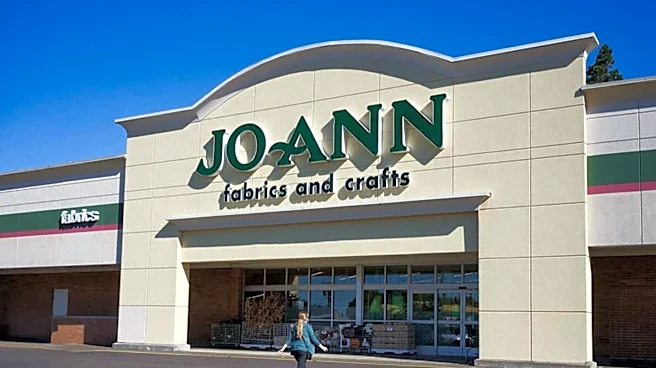
Leonard Green & Partners, a private equity firm, has been associated with controversial practices that have led to the decline of several businesses, including Party City and JOANN Fabrics. This firm is among others, such as Blackstone, Sycamore Partners, KKR,
Bain Capital, Apollo Global Management, The Carlyle Group, Sun Capital, and Golden Gate Capital, that have faced criticism for their investment strategies. These strategies often involve acquiring companies with borrowed money, burdening them with significant debt, extracting fees, and selling off assets. Critics argue that this approach frequently results in the financial collapse of the acquired businesses, leading to bankruptcies and job losses. The firm's involvement with Party City and JOANN Fabrics is highlighted as an example of this pattern, where the companies experienced business decline following private equity intervention.
Why It's Important?
The practices employed by private equity firms like Leonard Green & Partners have significant implications for the U.S. economy and workforce. When companies are loaded with debt and assets are sold off, it can starve them of the necessary funds for investment in upgrades, e-commerce, and overall operational health. This often leads to store closures, job losses, and a reduction in consumer choice, impacting local economies and communities. The decline of established retailers like Party City and JOANN Fabrics, which are often mainstays in shopping centers, can contribute to broader trends of mall decline and retail sector instability. Furthermore, these practices raise questions about corporate accountability and the long-term sustainability of businesses under such financial structures, prompting calls for regulatory reforms like the 'Stop Wall Street Looting Act' to protect companies and employees from what critics describe as exploitative financial maneuvers.
What's Next?
The ongoing scrutiny of private equity practices, including those of Leonard Green & Partners, suggests a potential for increased regulatory pressure and legislative action. Calls for reforms like the 'Stop Wall Street Looting Act' indicate a growing desire to hold private equity firms more accountable for the outcomes of their investments. This could lead to new regulations aimed at limiting the amount of debt private equity firms can impose on acquired companies, restricting asset stripping, or increasing transparency in their financial dealings. Such legislative changes could significantly alter the landscape of private equity investments, potentially forcing firms to adopt more sustainable and long-term growth strategies for the companies they acquire. Businesses currently under private equity ownership, or those considering such partnerships, may face a changing regulatory environment that could impact their financial structures and operational strategies.
Beyond the Headlines
Beyond the immediate financial implications, the controversial practices of private equity firms like Leonard Green & Partners touch upon deeper ethical and societal concerns. The focus on short-term profit maximization through debt-loading and asset sales often comes at the expense of long-term business health, employee welfare, and community stability. This raises fundamental questions about the role of finance in the real economy and whether current legal frameworks adequately balance investor returns with broader public interest. The decline of iconic brands under private equity ownership can erode consumer trust and contribute to a perception that financial engineering prioritizes wealth extraction over value creation. This ongoing debate could influence public opinion, consumer behavior, and ultimately shape the future regulatory environment for private equity, potentially leading to a re-evaluation of corporate governance and investment ethics in the U.S.