
What's Happening?
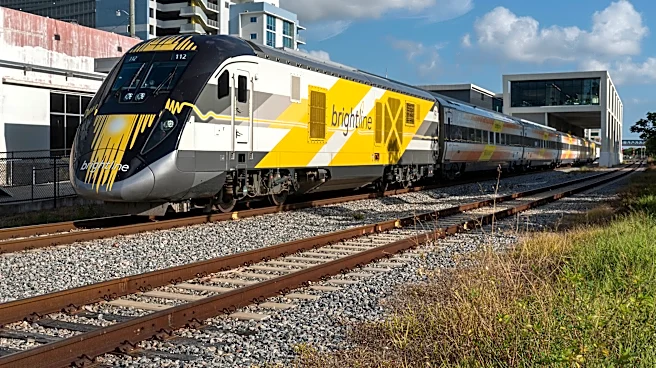
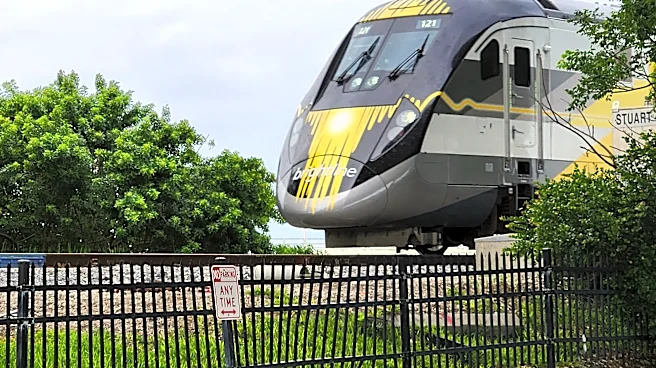
Brightline, the privately held passenger railroad operating in Florida, is restructuring its debt through bankruptcy court proceedings. This financial maneuver involves certain Brightline Florida entities
filing for Chapter 11 bankruptcy protection, though Brightline Trains Florida LLC, which manages the train service, has not filed. As part of a deal with its creditors, Brightline will secure an additional $490 million in funding, comprising $350 million in new junior debt and $140 million in additional senior debt. Despite these financial adjustments, Brightline's high-speed train services between Miami and Orlando will continue without interruption. This restructuring does not impact Brightline West, the sister company developing a high-speed rail line between Las Vegas and Southern California. The company's CEO, Patrick Goddard, stated that this agreement brings significant long-term capital at a time of growing momentum for the service.
Why It's Important?
This debt restructuring is crucial for Brightline's continued operation and future expansion, particularly as it seeks to attract sufficient ridership to cover its expenses. The infusion of $490 million in new capital will help stabilize the company's financial position and support its ongoing efforts to grow its customer base. The fact that the train services will continue uninterrupted is vital for Florida's transportation network, as Brightline has become a significant mode of travel between Miami and Orlando. However, the need for restructuring highlights the financial challenges inherent in developing and operating private intercity rail, especially when ridership and revenue projections fall short of initial expectations. This situation could influence future private rail projects, potentially leading investors to demand more conservative forecasts and increasing the likelihood of such projects relying more heavily on public funding.
What's Next?
Brightline will proceed with its debt restructuring in bankruptcy court while continuing its high-speed rail operations in Florida. The company will focus on leveraging the new $490 million capital to attract more riders and improve its financial performance. While ridership and revenue have shown growth year-to-date, the company's current figures are less than half the projected ridership and one-third of the predicted revenue from 2024, according to Tim Hynes of Debtwire. This indicates a continued need for strategic efforts to boost passenger numbers and revenue streams. Brightline also aims to extend its service to Tampa in the future, which would further expand its reach and potential ridership. The success of this restructuring and the company's ability to meet its financial goals will be closely watched by the transportation industry and potential investors in similar private infrastructure projects.
Beyond the Headlines
The Brightline situation underscores the complex economics and inherent risks associated with large-scale private infrastructure projects, particularly in the transportation sector. Despite being the nation's only privately held passenger railroad, Brightline has faced significant financial hurdles, necessitating a bankruptcy court restructuring. This case highlights the challenge of accurately forecasting demand and revenue for new transportation services, especially those requiring substantial initial investment. Furthermore, the company's safety record, with over 200 deaths along its tracks since its inception, presents a critical ethical and operational challenge that must be addressed alongside its financial restructuring. The broader implication is that while private capital can drive innovation in infrastructure, the long-term viability and societal impact of such ventures often require a delicate balance of financial prudence, public safety, and realistic market expectations. This could lead to increased scrutiny and potentially more public-private partnerships for future high-speed rail developments.