
What's Happening?
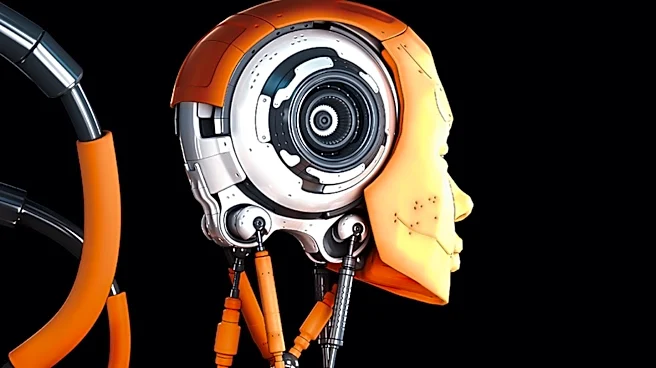
Nashville songwriter Chris Gray has turned to artificial intelligence to bring his music to life, creating an AI singer named 'Vance Drake.' Gray, who has spent decades writing songs in Nashville, uses
Vance Drake to perform his compositions, stating that the AI acts as a singer and does not write the music. This approach allows Gray to access production tools that independent songwriters often find unaffordable, effectively leveling the playing field with major record labels that possess larger budgets. Gray emphasizes the importance of transparency, asserting that listeners should always be aware when music is performed by an AI-generated artist. He plans to release a new song through Vance Drake monthly, consistently identifying the artist as AI-generated, while maintaining that the songs themselves are rooted in human songwriting and real-life experiences.
Why It's Important?
Chris Gray's use of an AI singer highlights a significant shift in the music industry, particularly for independent artists and songwriters. This development offers a solution to the financial and logistical barriers often faced by creators in getting their music produced and heard. By leveraging AI, songwriters can bypass the traditional gatekeepers of the music industry, such as major labels and expensive studio time, thereby democratizing music production. However, this trend also sparks debate about the role of AI in creative fields, raising questions about authenticity, emotional depth in music, and the potential for AI to displace human performers. Gray's commitment to transparency is crucial in navigating these ethical considerations, setting an example for responsible AI integration in the arts and fostering trust with listeners in an evolving musical landscape.
What's Next?
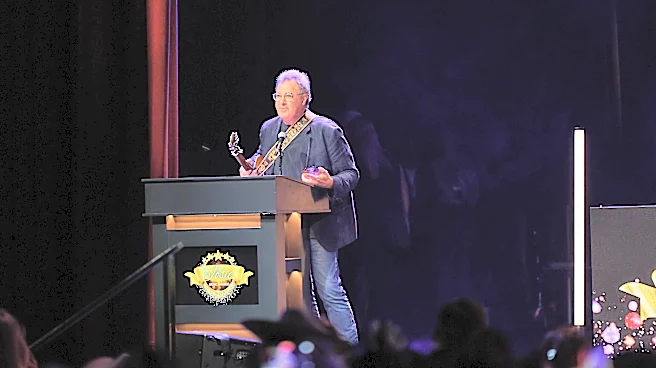
Chris Gray intends to continue releasing new music monthly through his AI singer, Vance Drake, maintaining full transparency about the AI's role. This ongoing project will serve as a real-world case study for how AI can be integrated into the creative process for independent artists. The music industry will likely continue to grapple with the implications of AI, leading to further discussions at events like the Nashville Songwriter Awards regarding copyright, ethical use, and the distinction between human and AI-generated content. As AI technology advances, more artists may explore similar avenues, potentially leading to new business models for music production and distribution. The legal framework surrounding AI-generated performances and compositions will also likely evolve, with a focus on ensuring fair compensation and protecting the intellectual property of human creators.
Beyond the Headlines
The use of AI in music, as exemplified by Chris Gray, delves into profound questions about the nature of art and the human experience. While AI can replicate voices and musical styles, the debate often centers on whether it can truly convey emotion or create with genuine intent. Songwriter and former ASCAP president Paul Williams's assertion that a song must be created by a human to be copyrighted underscores the legal and philosophical challenges. Gray's approach, where human songwriting is paired with an AI performer, suggests a hybrid model that could preserve the essence of human creativity while leveraging technological advancements. This development could lead to a redefinition of what it means to be a 'musician' or 'artist' in the digital age, fostering new forms of collaboration between humans and AI, and potentially shifting the focus from the performer to the underlying composition and its human origin.