


What's Happening?
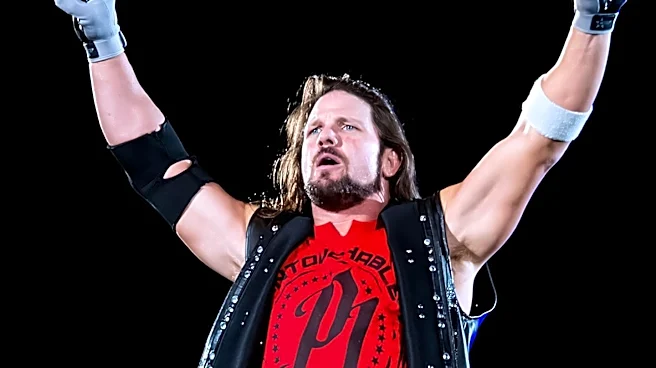
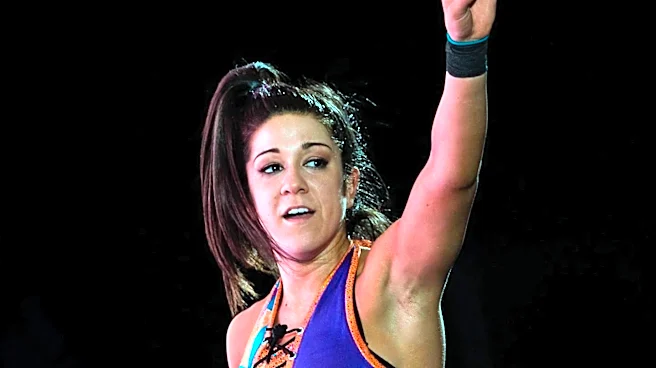
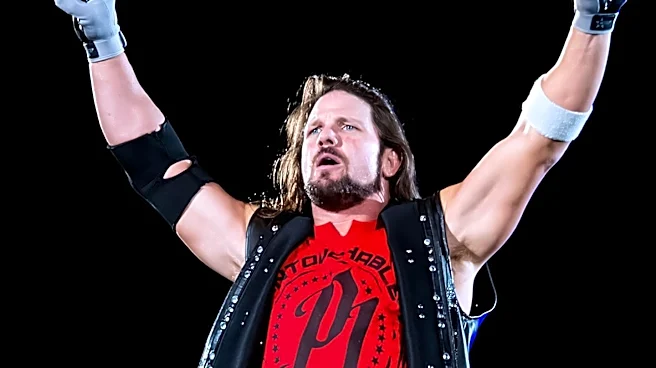
During the debut episode of The AJ Styles Podcast, WWE Superstar Bayley discussed the critical importance of authenticity for professional wrestlers. She joined AJ Styles to talk about her career, her 'Camp Lodestone' initiative for independent women's
wrestlers, and the lessons she has learned in the business. Bayley advised aspiring wrestlers to embrace their genuine emotions rather than focusing solely on portraying a specific character. She explained that allowing her natural feelings to come through helped her connect more deeply with audiences. Bayley noted that fans are adept at discerning when a performer is truly enjoying their work versus when they are merely 'faking it.' AJ Styles agreed, suggesting that Bayley's on-screen persona is an amplified version of her real personality, which resonates with fans.
Why It's Important?
Bayley's insights into authenticity in professional wrestling are significant for the industry's future, particularly for emerging talent. Her emphasis on genuine emotion and self-expression challenges the traditional notion of strictly adhering to a pre-defined character, suggesting that a more authentic approach can lead to a stronger connection with the audience. This perspective can influence how wrestling promotions scout, train, and develop their talent, potentially leading to more nuanced and relatable characters. For fans, this focus on authenticity enhances the viewing experience, as they can perceive the genuine passion and enjoyment of the performers. It also highlights the evolving nature of sports entertainment, where the line between character and individual is increasingly blurred to create more compelling narratives.
What's Next?
The discussion on authenticity by prominent WWE Superstars like Bayley and AJ Styles could encourage a shift in how professional wrestling characters are developed and presented. This emphasis might lead to more wrestlers being encouraged to infuse their real personalities into their on-screen personas, fostering deeper connections with the audience. For independent wrestling circuits and developmental territories like NXT, this philosophy could become a guiding principle in talent development, prioritizing genuine emotional expression alongside technical skill. The continued promotion of authenticity could also influence fan engagement, as audiences increasingly value transparency and relatability from their favorite performers, potentially leading to more dynamic and engaging storylines in the future.
Beyond the Headlines
The concept of authenticity in professional wrestling, as articulated by Bayley, extends beyond the ring into broader discussions about identity and performance in public life. In an era dominated by social media and curated personas, Bayley's message underscores the value of genuine self-expression. This resonates with a societal trend where audiences are increasingly seeking realness and vulnerability from public figures. The wrestling ring, in this context, becomes a stage where the tension between a crafted character and an authentic self plays out, offering a unique lens through which to examine the complexities of identity in performance-driven fields. This perspective can also inform how individuals navigate their professional and personal identities in an increasingly scrutinized public sphere.