

What's Happening?
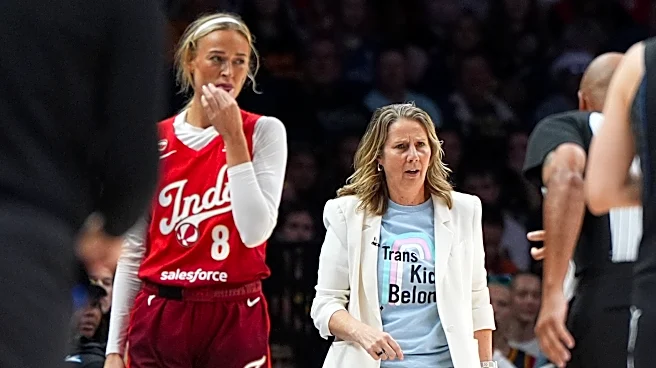
During a WNBA game between the Minnesota Lynx and the Indiana Fever, Lynx coach Cheryl Reeve wore a shirt supporting transgender athletes, which was highlighted by ESPN commentators. The shirt, reading 'Trans kids belong,' was worn in response to recent
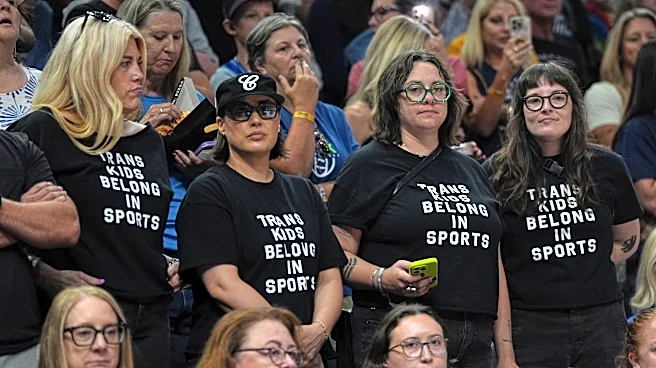
comments by Sophie Cunningham about the participation of transgender athletes in women's sports. The broadcast acknowledgment of Reeve's stance sparked a significant reaction online, with some viewers criticizing the network and the league for spotlighting the issue. The game itself saw the Lynx defeat the Fever, ending Indiana's five-game winning streak. The pre-game conversation between Reeve and Cunningham, despite their differing views, was noted as respectful, though the broader online discourse remained intense.
Why It's Important?
The incident underscores the ongoing debate about the inclusion of transgender athletes in sports, a topic that has garnered significant attention and differing opinions. Reeve's public support for transgender athletes highlights the role of sports figures in advocating for social issues and using their platforms to influence public discourse. The reaction to the ESPN broadcast reflects the polarized nature of the debate and the challenges faced by sports organizations in navigating complex social issues. This situation illustrates the intersection of sports and social advocacy, emphasizing the impact of public figures in shaping conversations around inclusivity and equality.
What's Next?
The WNBA and its stakeholders may continue to engage in discussions about the inclusion of transgender athletes, potentially influencing league policies and public perceptions. The league could face ongoing scrutiny from both supporters and critics of transgender participation in sports, prompting further dialogue and potential policy considerations. The respectful exchange between Reeve and Cunningham suggests a possibility for constructive conversations among players and coaches, which could lead to a more inclusive environment within the league. As the debate continues, the WNBA may serve as a platform for broader societal discussions on inclusivity and equality in sports.