






What's Happening?
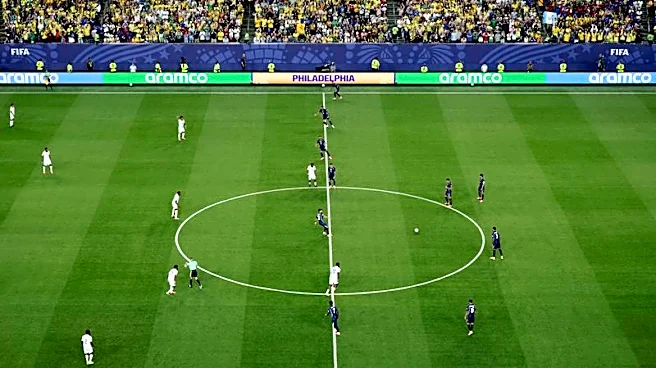
The 2026 FIFA World Cup has seen significant improvements in match officiating, aimed at enhancing the flow and fairness of the games. Referees have been tasked with balancing penalties and allowing physical play, resulting in six red cards issued across
more than 30 matches. These changes are part of FIFA's new measures to reduce time-wasting and improve match speed. The Video Assistant Review (VAR) system has also been expanded to include more scenarios, such as determining the last touch before a ball goes out of bounds and offside positions. These adjustments have been evident in recent matches, including a U.S. game where a goal initially disallowed for offside was reinstated after VAR review.
Why It's Important?
These referee improvements are crucial for maintaining the integrity and excitement of the World Cup. By addressing time-wasting and ensuring accurate decisions through VAR, FIFA aims to provide a fairer and more engaging experience for players and fans alike. The changes could influence future tournaments by setting new standards for officiating, potentially reducing controversies and enhancing the overall quality of the sport. This approach benefits teams by allowing them to focus on skill and strategy rather than exploiting loopholes in the rules.
What's Next?
As the World Cup progresses, the impact of these referee improvements will continue to be monitored. FIFA may further refine these measures based on feedback and outcomes from the tournament. The success of these changes could lead to their adoption in other international competitions and domestic leagues, promoting a more consistent and fair approach to officiating in soccer worldwide.